
The Glaring Contradictions Between Weight in a Vacuum and Presumed Weightlessness in the Vacuum of Outer Space: The Gravity Delusion

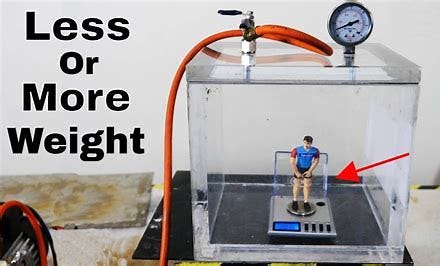
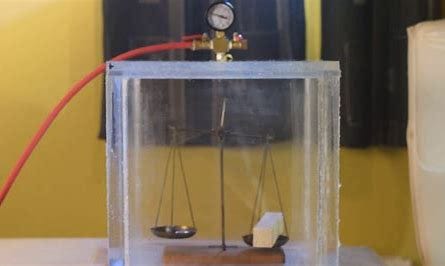
One fascinating fact of vacuum analysis is that when objects are placed in a vacuum, they actually weight more than when placed outside the vacuum. This somewhat mysterious effect is due to the fact that weight is a function of atmospheric pressure density in relationship to the mass density of the object within it. In Newtonian physics, weight is said to be the name of the force exerted on an object due to the acceleration of Gravity. On Earth, weight is said to be equal to the mass times the acceleration due to Gravity (9.8 m/sec2 on Earth). But, as we shall see, this definition collapses beneath the WEIGHT of its own internal inconsistencies and contradictions…pun intended.
If Gravity was a real force, it would not discriminate between whether you placed an object in a high or low pressure setting, when at the same altitude above The Earth. Objects would simply weigh the same, regardless of the external gas pressure pushing upon it from all sides on the surface of The Earth.
Afterall, gas pressure on the surface of The Earth is not an upwards force, thereby counteracting imaginary Gravity. In other words, surface level gas pressure, or the lack thereof, could not change the weight of an object if gravitational pull was what was causing weight, as is claimed in Newton’s “mass attracts mass” model.
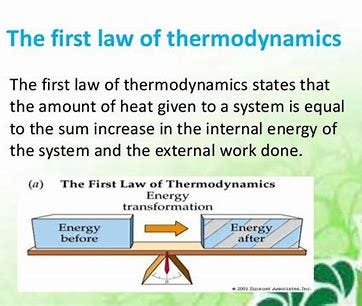
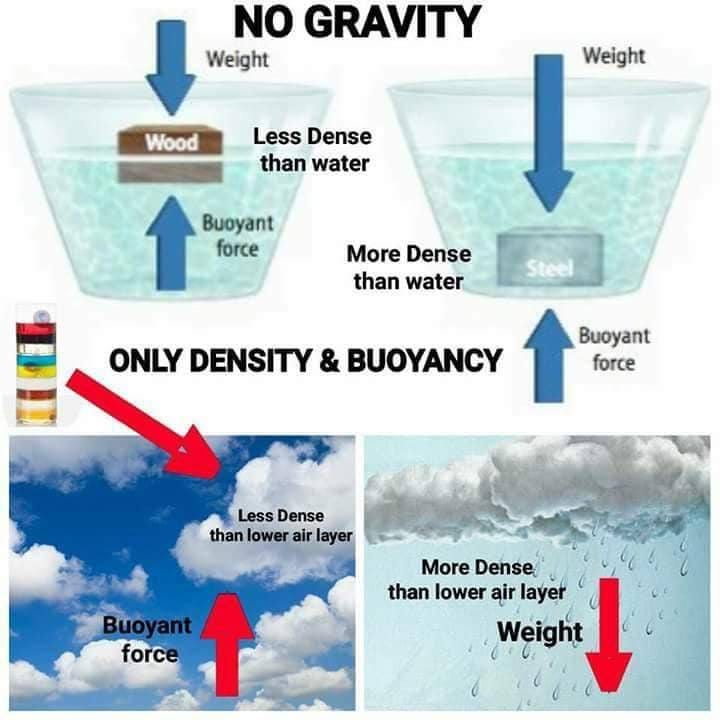
Rather, it is a pounds per square inch envelope of pressure acting upon all sides of an object that causes weight. There is nothing pushing an object upwards or downwards to affect weight. Objects weigh more or less dependent upon their mass density, and the density of the medium they are within. This is a dynamic relationship between all the aforementioned variables, which is typically called buoyancy, and not a directional vector force description. If anything, this relationship is more about fluid dynamics than anything else. Fluid dynamics is a subdiscipline of fluid mechanics which describes the flow of fluids, liquids, and gases. The foundational axioms of fluid dynamics are the conservation laws, specifically, The Conservation of Mass, The Conservation of Linear Momentum, and The Conservation of Energy (also known as The First Law of Thermodynamics).
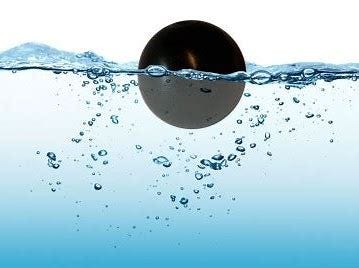
To illustrate, a wooden ball will weigh more in the air than in water because the atmospheric density of the water that the wooden ball is displaced within is heavier than the atmospheric density of air that the ball was formally in. Thus, the water will “support” some the ball’s mass, thereby decreasing its measurable weight. It’s the same effect as standing on a bathroom scale, but pulling yourself up slightly by holding onto a bar above you to decrease your overall weight. You are supporting yourself, thereby decreasing your measurable scale weight.
Similarly, helium balloons rise in air because they are less dense than air, but they will fall in a vacuum, because suddenly, the external gas pressure surrounding the helium balloon is less than that of helium, itself, thereby decreasing the available “support” power of the external atmosphere to suspend the balloon.

But what happened to the force of Gravity in the above situations? Why does it turn off or on dependent upon the gas pressure that objects exist within? The fact is that Gravity does not factor into any of this at all. It is a fictitious force and never consistent because it does not exist.
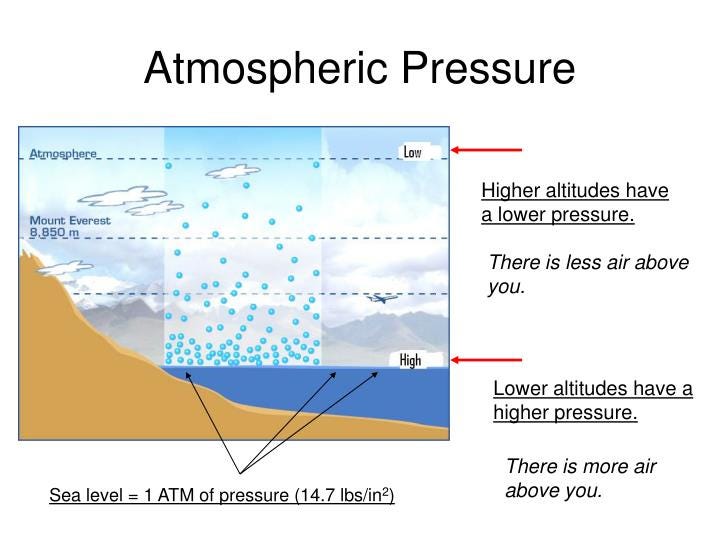
Knowing this, if objects weigh more in vacuum, how can they, simultaneously, weigh less as they approach the vacuum of Outer Space? The idea behind Gravity is that mass attracts mass, and therefore, Gravity is said to be strongest at the surface of The Earth. As you ascend in altitude, you are getting farther and farther away from The Earth’s surface, which, according to this model, you should be getting lighter and lighter. However, as you ascend, you are also experiencing less and less atmospheric pressure until you finally reach The Exosphere and then the vacuum of Outer Space at: 1×10⁻⁶ to <3×10-17 Torr 100 µPa to <3fPa, where there is so little gas pressure that you would have MORE weight than on the surface of Earth, not less weight, a situation that was demonstrated in our vacuum experiments on the Earth’s surface.
The contradiction lies within the Heliocentric and Newtonian gravitational claim that you should weigh the most on the surface of the Earth than in The Exosphere and the vacuum of Outer Space, but in reality, you weigh less and less as you ascend and approach less and less gas pressure. If Gravity was a real force, a vacuum condition would not alter the weight of an object due to its presumed equivalence to all objects, regardless of gas pressure density.
But since the gas pressure density in which an object exists within can alter its weight, we can clearly see that it is the relationship between an object’s mass density, and the density of the medium in which it exists that is creating its measurable weight, which is classically defined by the principle of buoyancy. When a body is weighed in air, the buoyant force, (which is really just the dynamic relationship between object density and the external atmospheric density), of the air will reduce its weight.
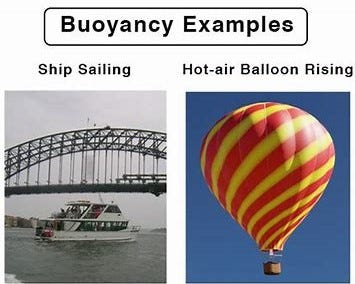
Similarly, as in the case with submarines, buoyancy is caused by pressure differences acting on opposing sides of the submarine immersed in a static fluid. Pressure will increase as you go deeper into the ocean, and the force exerted by pressure on the top of the submarine will be smaller than the force exerted by pressure on the bottom of the submarine:
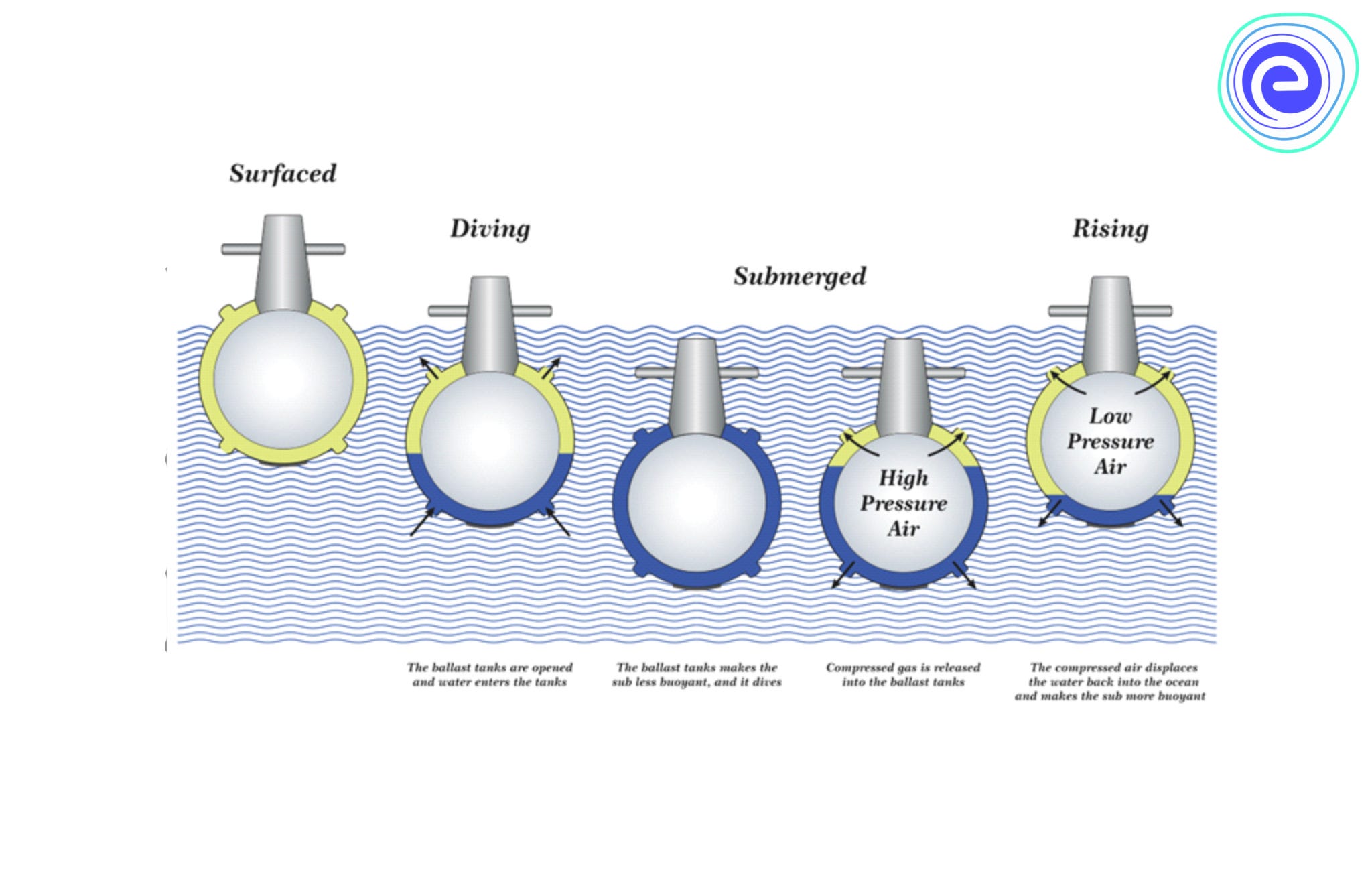
Contrarily, in a vacuum there would be no such force, and thus the weight of a body would be more. There is no upthrust in a vacuum, whereas in air, gas pressure pushes an objects or persons from all sides. The air is dense and it is similar to water where the weight of an object is equal to the weight of the water displaced by it.
In Newtonian mechanics, gravity is assumed to be a force. This force draws objects having mass towards the center of any massive body. At the Earth's surface, the force of gravity is counteracted by the mechanical (physical) resistance of the Earth's surface. So in Newtonian physics, a person at rest on the surface of a (non-rotating) massive object is in an inertial frame of reference.
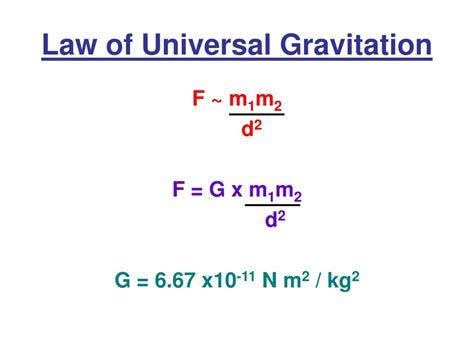
Thus, the Heliocentric claim that objects are weightless in space due to the lack of gravitational pull is false. In space, where there is said to be no Gravity, objects would weigh more than on the Earth’s surface, if we were to abide by Newtonian Gravitational Mechanics. This means that when you are in space, away from Earth, you would be falling back to Earth, not floating away from it. Hence, all the astronaut pictures that depict weightlessness on The Moon and in Outer Space are all fake.
R.I.P. Gravity.
A Force of Gravity Cannot Exist:
Does a Vacuum Chamber Weigh Less Under Vacuum?—Mind Blown!:
Do You Weigh More or Less in a Vacuum Chamber?: