The Downward Vector: The Observation of the Effect and The Explanation for the Effect are Not Necessarily The Same Thing


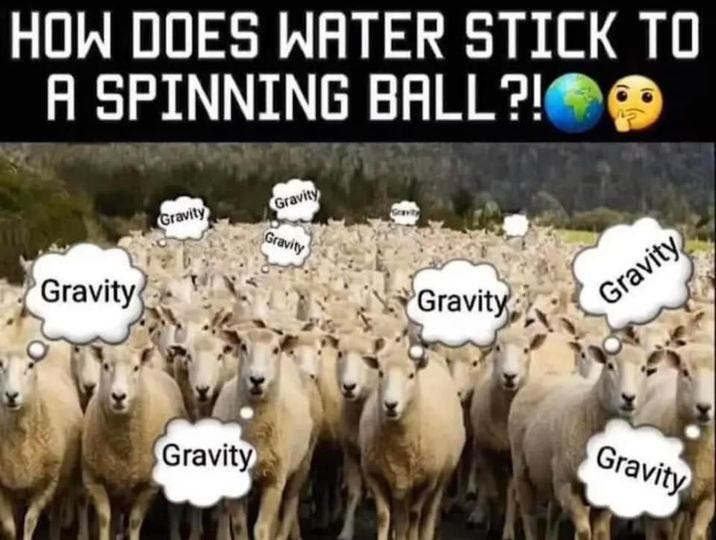
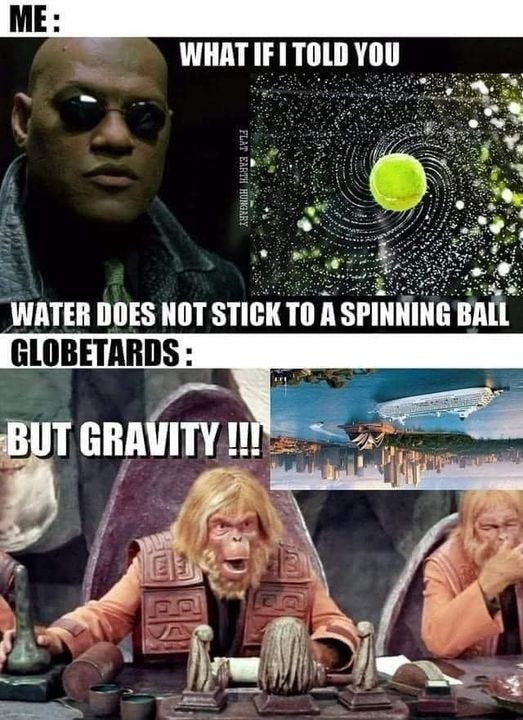
People often assume that when we see things fall, the only explanation must be the hypothetical theory of Newtonian Gravity. However, in observing something fall, the assumption that the cause is Gravity is just that…an assumption. All we can say upon observing a falling object is that it falls. That’s the effect of something, but we cannot, ad hoc, assume that the mythical force of Gravity is behind it. In doing so, we erroneously conflate the observation of an effect with the explanation for the effect.
When all is said and done, the idea of a spherical Earth that possesses a causative force called Gravity is simply something embedded in our imagination through centuries of indoctrination from a misinformed educational system, intentional deceit from the Jesuit Vatican, and Hollywood science fiction movies.

Observation of The Effect:
Observing that an effect occurs is not the same as knowing (or correctly stating) why it occurs. The two activities belong to different levels of inquiry: one is primarily descriptive and empirical; the other is theoretical, causal, and explanatory. Conflating them is a common source of error in everyday reasoning, science, and policy.
This is the registration of a phenomenon or regularity—something measurable, repeatable, or noticeable. It answers questions like “What happens?” or “What is the pattern?”
Examples Include:
1. Objects fall toward the Earth when dropped.
2. A particular drug is associated with reduced symptoms in a group of patients.
3. The apparent motion of the Sun across the sky.
4. Statistical correlations (e.g., ice cream sales and drowning rates rising together in summer).
Observations can be refined with better instruments, controls, or larger samples, but they remain reports of what is the case. They do not, by themselves, supply the mechanism, the underlying causes, or the full set of conditions that produce the effect.
Explanation for The Effect:
This is an account of why or how the observed regularity arises. It typically involves causal relations, mechanisms, laws, models, or theories that go beyond the data.
Good Explanations:
1. Identify relevant causes and rule out alternatives.
2. Generate novel, testable predictions.
3. Unify disparate observations under a coherent framework.
4. Survive attempts at falsification or severe testing.
Explanations are underdetermined by observations alone: the same set of data is often compatible with multiple, mutually inconsistent stories. Distinguishing among them requires additional theoretical work, experiments that intervene, or independent lines of evidence.
Why They Come Apart:
1. Multiple Compatible Stories. The same falling-object data fit Aristotelian “natural place” physics, density, buoyancy, and the natural order of object placement within a certain density field as the reason for the downward vector, Newtonian Gravity, and later General Relativity. Each explanation made different further claims; only further observations and tests discriminated among them.
2. Correlation is not Causation. Observing that two variables move together does not explain the link. Shared causes, reverse causation, selection effects, or chance can produce the same pattern. Establishing mechanism usually requires intervention or careful causal modeling.
3. Theory-Laden But Still Distinct. Observations are rarely pure. Prior concepts influence what we notice and how we classify it. Yet noticing a pattern (or failing to notice one) is still different from constructing and validating a causal account of it.
4. Incomplete or Noisy Data. Real observations are finite, approximate, and context-bound. An explanation claims generality and depth that the raw data do not automatically confer.
5. Practical and Psychological Pitfalls. People often treat a vivid observation as self-explanatory (“I saw it work, so I know why”), leading to superstition, post-hoc rationalization, or overconfident policy. Science advances precisely by treating the observation as the starting point that demands an explanation, not as the explanation itself.
In short, reliable knowledge requires both: careful observation to establish what needs explaining, and rigorous explanation to turn patterns into understanding that can predict, control, or be revised. Treating the mere sighting of an effect as its own explanation short-circuits that process.
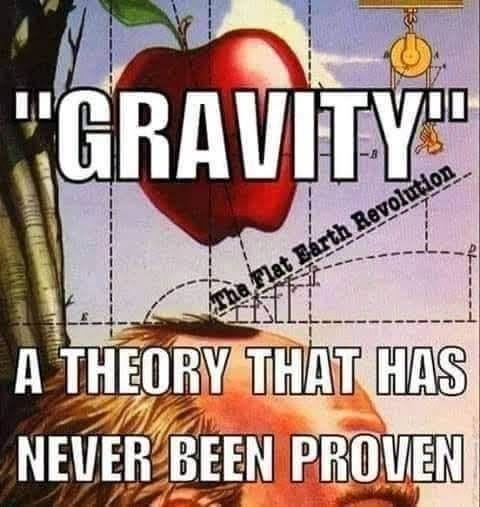
The Losing Ball Game of Gravity: Sparse Molecular Density, Unified Mass, and Gravity Versus the Alleged “Near Perfect” Vacuum of Outer Space
Defying Gravity: The Pandora’s Box of Convoluted Scientism Explanations

One thing I often hear is, “If Gravity is a real force, how come it arbitrarily can hold down trillions of tons of ocean water and yet something as light as a helium balloon floats up effortlessly…”Defying Gravity?” (Yeah, I know, that’s a song from The Smash Hit Musical, Wicked...the pun was intended.)
And, I agree, why is Gravity so arbitrary and nonsensical when you actually think about it? And with each supposed explanation that science gives, they open up a Pandora’s Box of contradictory questions.
An Endless Chain of Explanations:
1. Do the Earth’s oceans’ trillions of droplets form a “Unified Mass” of their own, causing The Earth’s alleged molten spinning core to hold the oceans down like a massively unified heavyweight?
2. But then a little tiny drop of water should float up like a Helium balloon since it weighs a fraction of the Unified Mass of an ocean’s collective unified droplets. And yet, such is not the case. And so it cannot be a mass issue. From the logic of mass being a function of Gravity (Mass equals Gravity), the single water droplet certainly fails the test of sufficient mass to allow Gravity to hold sway over it. It has the same mass as a tiny baby moth, and yet while the water drop remains inert upon the table, the baby moth effortlessly defies gravity and floats up.
3. Ok, then can we say that the baby moth’s wings allow it to defy Gravity, then, while the water droplet has no wings and so, being of such minor mass, it remains inert on the table? It is one possibility.
4. And yet, it gets complex again when you consider a tiny soap bubble, with a mass twice as small as the water droplet, and yet it rises effortlessly, and with no tiny wings to assist it? Obviously, there is surface tension to consider with soapy water, and internal pressure applied by the air inside the bubble upon the bubble’s surface to sustain the bubble. Add that to the air you exhale, which in most cases is warmer than the ambient air temperature. This is the air that ends up in the bubble. Due to the density difference (hot air rises), the soap bubble will rise. And, of course, generally bubbles do not keep rising indefinitely. Thermal equilibrium is quickly reached, and the driving buoyancy force disappears, causing the bubble to burst. Additionally, the density of water is affected by temperature. When water is heated, it expands, increasing in volume, but decreasing its overall molecular density, and so it rises as gas. The warmer the water, the more space it takes up, and the lower its density.
And so, the Pandora’s Box of convoluted scientism explanations continues to grow with each question raised about Gravity. It swiftly becomes a never-ending chain of explanations to justify previous faulty explanations. But the simple fact remains that buoyancy and density, as well as dielectric and electromagnetic principles, perfectly explain all the upward and downward motions of matter. Gravity is an unproven, extraneous, science fiction idea that was only created to justify The Heliocentric Model, Evolutionary Theory, Big Bang Cosmology, and ultimately, the Alien Contact narrative.
The Real Answer:
Gravity is an illusory, fictional fantasy from ancient Hermetic and Kabbalistic Occultism, and nothing more. Electromagnetics, Dielectric Potential, Density, and Buoyancy are all that is necessary to explain all Newtonian physical properties and actions.
Flat Earthers Don’t Understand Gravity?:
You Simply Cannot Have it Both Ways:
1. A Gravitational pull that is strong enough to resist the unimaginably powerful vacuum of Outer Space, weighing in at an unimaginably vacuous 1×10⁻⁶ to <3×10-17 Torr 100 µPa to <3fPa, without smashing The Earth’s atmosphere down into a singularly flat and homogeneous blanket of isotropic density, along with all the creatures inhabiting it.

and…
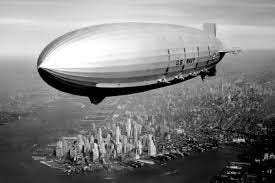
2. A Gravitational pull that is weak enough to allow butterflies to float around, bubbles to float, multi-ton/high density clouds to float with ease, The Zeppelin Luftschifftechnik rigid airship weighing in at a mighty 23,567 pounds but can float around effortlessly, ocean waves frolic and dance with zero concern for Gravity, Bumble Bees to hover about with ease, helium balloons to float up effortlessly, little babies to move their limbs about effortlessly, and birds to fly for hours at altitudes as high as 10,000 feet with ease.