
Questions, Comments, and Concerns Regarding The Safire Project: Vacuum Versus Pressure


J.P. Bush Food Forager Said This:
“And just what constrains the spherical concentric shells of the SAFIRE apparatus's atmosphere from exploding outwards into the vacuum of the chamber? There's no 'wall' between the plasma and the vacuum (there is only containment between the vacuum and earth atmosphere). Its only hydrogen gas electrified into a plasma state, separated into visible double layers, self-sorted, and held in place by the laws of electromagnetism.
Now I know that SAFIRE has several theoretical flaws which makes it unsuitable as a true analogue to earth or the sun: SAFIRE's orb was an anode, whereas earth and the sun are electrically cathodes (Juergens was wrong on this point), so a copper orb cathode encased with a steel anode would have been more accurate representation of our solar system's dynamics. Sadly, we will never see any experiment reversing SAFIRE's polarity despite our repeated requests.
Second, the entire apparatus is encased, an unfortunate necessity of terrestrial vacuum research, whereas the solar system is open and free to all electromagnetic particle movement (e.g., solar wind, cosmic rays). The only actual space vacuum research I am aware of is that done by the Russians on ISS, and they certainly were not testing the SAFIRE device in open space, which is the next necessary step:
Thirdly, SAFIRE's orb has no magnetic field, unlike earth or the sun. This may result in changes to the shape of the SAFIRE orb's hydrogen plasma atmosphere.
Fourth, no SAFIRE experiments have utilized earth minerals (e.g., granite) as the cathode orb, nor standard earth air (N2 O2 Ar He H2 CO2) to see what might happen with spherical atmospheric formation in a vacuum. I doubt any such experiments will occur despite our requests for them.
But those significant points aside, it is still a practical demonstration that a sphere can form a layered plasma atmosphere in a vacuum without any outward 'explosion' of the atmosphere against the vacuum. The electromagnetic properties of the hydrogen plasma are enough to retain its spherical shape, layering and overall electrical isolation from the surrounding vacuum. And because plasma physics is ubiquitous across the entire universe at every scale, micro to macro, they can apply equally to planetary atmospheres as much as to SAFIRE's star simulation.
It may just be that your precious raqia is the same layered atmospheric plasma phenomenon that once upon a time in ancient memory was previously visible in the sky and resembled a solid curved disc or upturned bowl. That same plasma layer(s) still exists now, only in dark mode rather than glow, because of catastrophic alterations of earth's electrical environs in the millennia between then and now.”
My reply:
Thank you for your questions and comments.
To begin with, when you ask, “Just what constrains the spherical concentric shells of the SAFIRE apparatus’s atmosphere from exploding outwards into the vacuum of the chamber.” Well, the Safire team states it right on their website: A Plasma Trapping Mechanism. They explain how plasma trapping mechanisms must be employed in order to prevent ions from impacting and damaging the cathodes and the chamber walls, since the electrochemical catalytic process between hydrogen and other trace elements, alone, cannot sufficiently isolate the electromagnetic plasma effect to the anode without ions blasting off in all directions and hitting the inner walls of the chamber. Plasma trapping mechanisms also help to maintain the superheated plasma in a stable configuration. In short, the electrochemical catalytic process, itself, is insufficient in isolating the plasma configuration around the anode without this extra trapping mechanism.
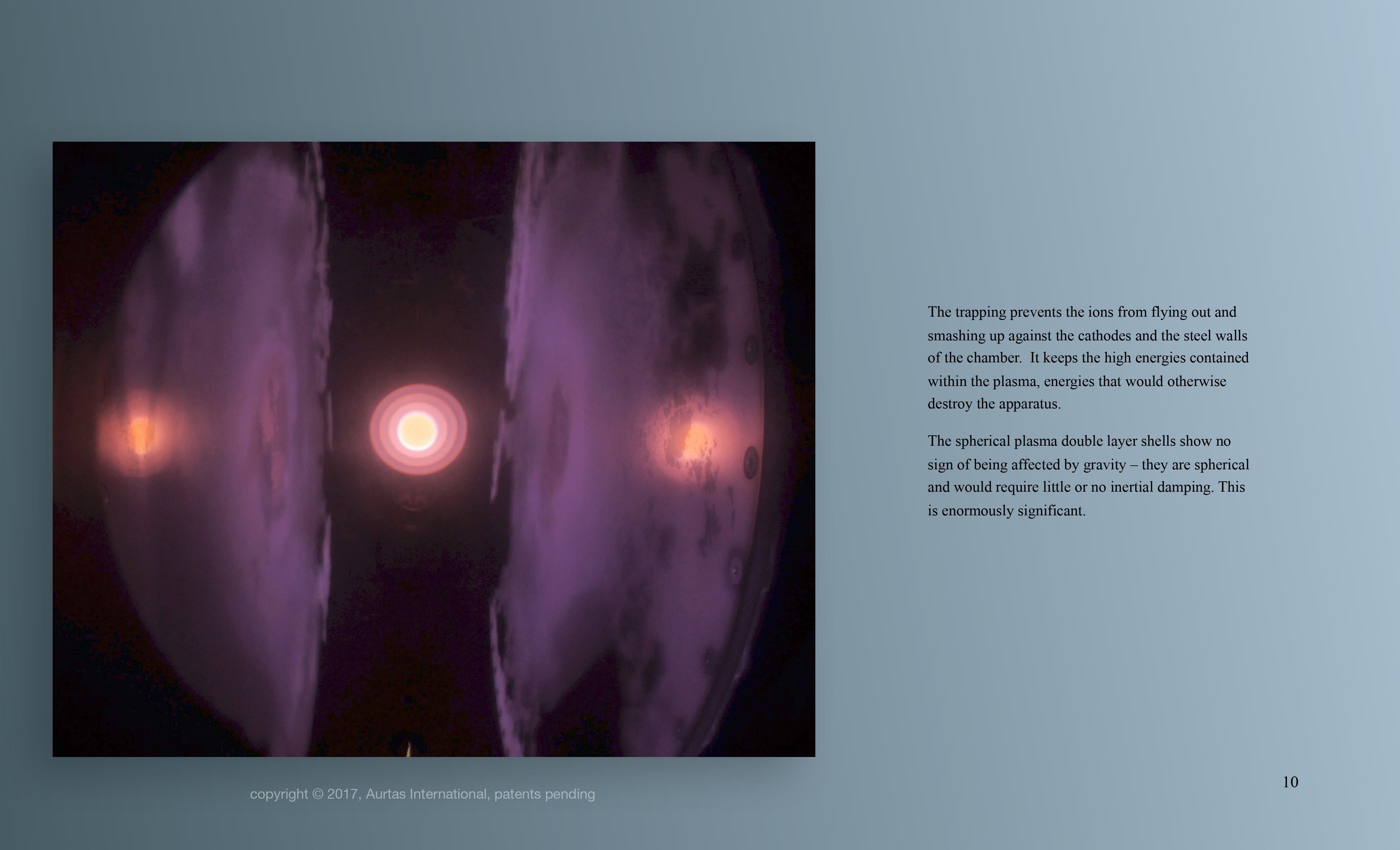
The Safire vacuum chamber is initially a contained vacuum. However, the electrodynamic effect can only isolate itself around the anode if hydrogen, or theoretically, if some other noble gas is introduced into the vacuum chamber, in which case, the hydrogen gas is electrified into a plasma state around the anode within the sealed chamber. But as soon as you introduce the hydrogen into the vacuum chamber, the chamber is no longer in a vacuum state. Even a small amount of hydrogen gas introduced into a vacuum chamber will increase the pressure within the chamber, moving it away from a perfect vacuum and creating a partial vacuum, at best. Thus, the pressure from the hydrogen changes the vacuum state into one of pressure, in which case, there is no reason for the dual electrified plasma layers to expand outwards to reach the inner walls of the Safire Chamber anymore because the entire chamber suddenly becomes a homogeneous electromagnetic pressure field, with an electrified plasma state at its core, analogues to a light bulb with a burning filament at its core.
Think of the evolution of the incandescent lightbulb. Early incandescent lightbulb bulbs used a quasi-vacuum to prevent the filament from burning up in the presence of too much oxygen. The glass bulb was evacuated to create a quasi-vacuum, meaning almost all the air was removed. This was crucial because oxygen would react with the hot filament, causing it to burn up quickly. And while some early light bulbs did use a quasi-vacuum, modern incandescent bulbs typically contain an inert gas like argon or nitrogen, which causes them be even less a true vacuum. And so, as soon as hydrogen is introduced into the Safire Chamber vacuum, it is no longer a true vacuum anymore. There is now pressure in the vacuum chamber system, helping to mold the electromagnetically charged hydrogen around the anode. It does this by creating a pressurized field within the chamber which, essentially, enables the chamber walls to “push back”, as a manner of speech, against the excited plasma core, thereby, assisting in isolating the plasmatic hydrogen around the anode, since that is the epicenter of the electromagnetic disturbance within the chamber. The entire chamber is pressurized at this point with electrochemically excited ionic plasma and hydrogen gas. It is no longer a vacuum.
Additionally, while a vacuum is characterized by low pressure, the plasma within it is not at zero pressure. The plasma, itself, has a pressure due to the movement and collisions of its charged particles. Thus, in addition to the hydrogen, the plasma effect creates even more pressure in a vacuum. In fact, plasma is often generated in vacuum environments for various industrial applications because the plasma, itself, exerts pressure. This pressure can be harnessed for processes like surface treatment and material modification. In short, adding hydrogen and plasma to a vacuum chamber will change the pressure inside it, meaning it’s no longer a perfect vacuum.
Subsequently, making the claim that The Safire Chamber, with its anode, is somehow similar to The Earth’s electromagnetic plasma layers being able to constrain The Earth’s atmosphere from the inconceivably powerful vacuum void of Outer Space at 1×10⁻⁶ to <3×10-17 Torr 100 µPa to <3fPa is an incoherent and false analogy. 10^-17 Torr represents an extremely powerful vacuum. It falls within the range of what is often referred to as "ultra-high vacuum" (UHV) or even "extremely high vacuum" (XHV), depending on the specific categorization. A pressure of 10^-17 Torr indicates a very low density of gas molecules, making it a highly evacuated environment.
In the first case, The Safire Chamber is a closed, encased system, where pressure can easily be generated through the introduction of hydrogen and plasma, resulting in hydrogen to be easily localized around an anode, while the vacuum void of Outer Space is an open system, meaning regardless of how many electromagnetic plasma layers exist in The Earth’s atmosphere, the Outer Space vacuum void would obey The Laws of Thermodynamics, resulting in The Earth’s atmosphere being whisked out into the vacuum void to fill any available volume. In the Heliocentric Model, there is simply no solid and impermeable barrier to stop this natural Thermodynamic effect, and no amount of electromagnetic plasma layers could ever impede this well-tested, scalable, repeatable, observable natural Thermodynamic effect, either. Further, no empirical evidence exists to demonstrate the veracity of such an electrodynamic effect, as well, certainly not The Safire Project.
To conclude, containment is the necessary antecedent to pressure, as The Safire Chamber proves, and The Earth, indeed, has an atmospheric pressure, which points to the fact that The Earth’s atmosphere is, indeed, contained. The very idea that electromagnetic plasma effects could constrain The Earth’s atmosphere against the hypothetical vacuum void of Outer Space at 1×10⁻⁶ to <3×10-17 Torr 100 µPa to <3fPa flies in the face of everything we know about Thermodynamics and the way in which high pressure states must flow to lower pressure conditions to achieve Thermodynamic equilibrium. These are testable, repeatable, scalable, observable facts of science. However, imagining a hypothetical Outer Space vacuum that co-exists contiguous with the atmospheric pressure of The Earth’s atmosphere without a solid and impermeable barrier between these pressure conditions is something that has never been achieved or seen in all of Mankind’s history in any legitimate empirical test, repeatable demonstration, or natural observation. Quite simply, high pressure moves to low pressure to fill any available volume in a vacuum. It’s a well-tested Thermodynamic principle. If you had containment with The Earth, electrodynamic plasma effects would work, and they do work because The Earth does possess containment via a solid and impermeable crystalline Firmament with electrodynamic plasma properties.
One Final Note:
Any non-empirical claims and theoretical speculations that you may have made concerning solar winds, planets, solar systems, etc...in a vacuum void of hypothetical Outer Space, fall, as far as I am concerned, within the domain of theoretical and speculative unfalsifiable claims, and which have little bearing on the topic of testable empirical science. As such, they have no place in this discourse.
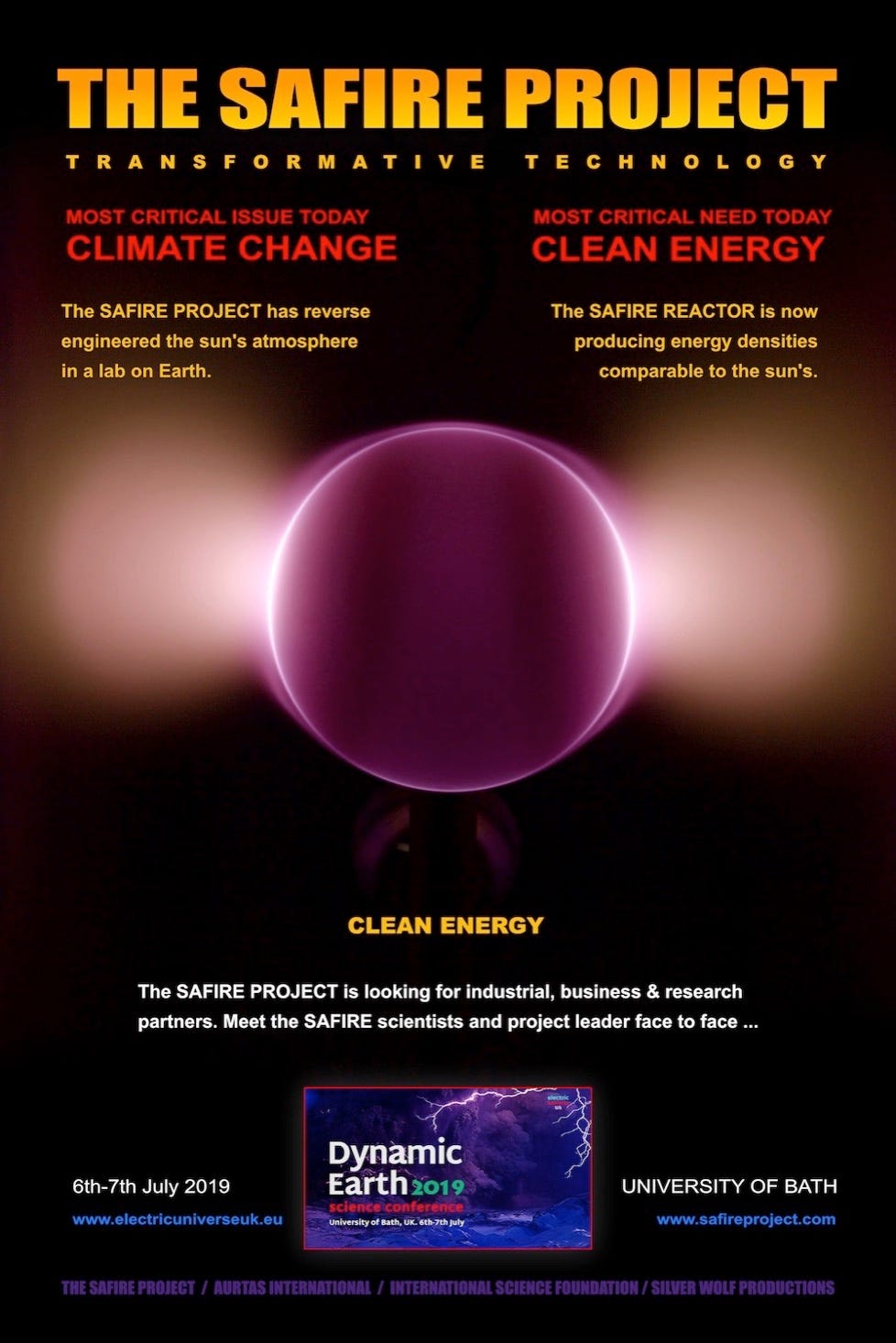
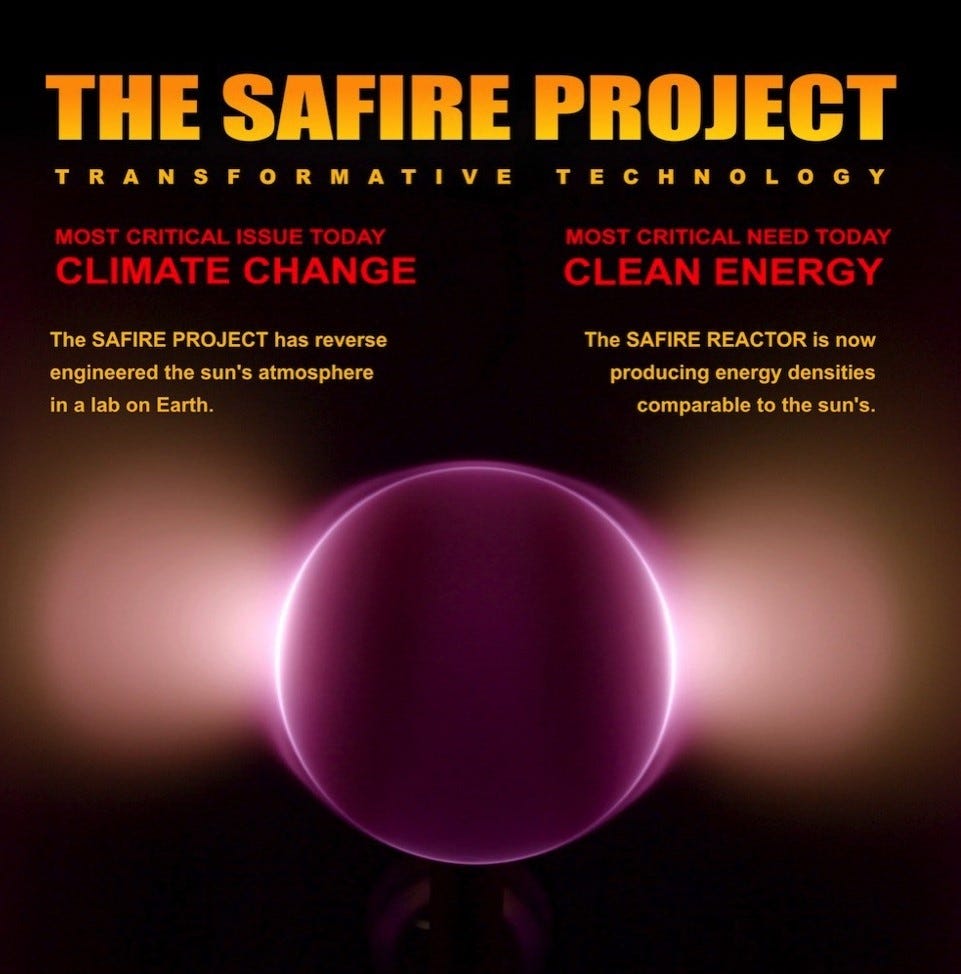
The Safire Project’s Major Discovery: Spherical Plasma Double-Layer Shells Only Form in a Highly Enervated Enclosed Vacuum Chamber
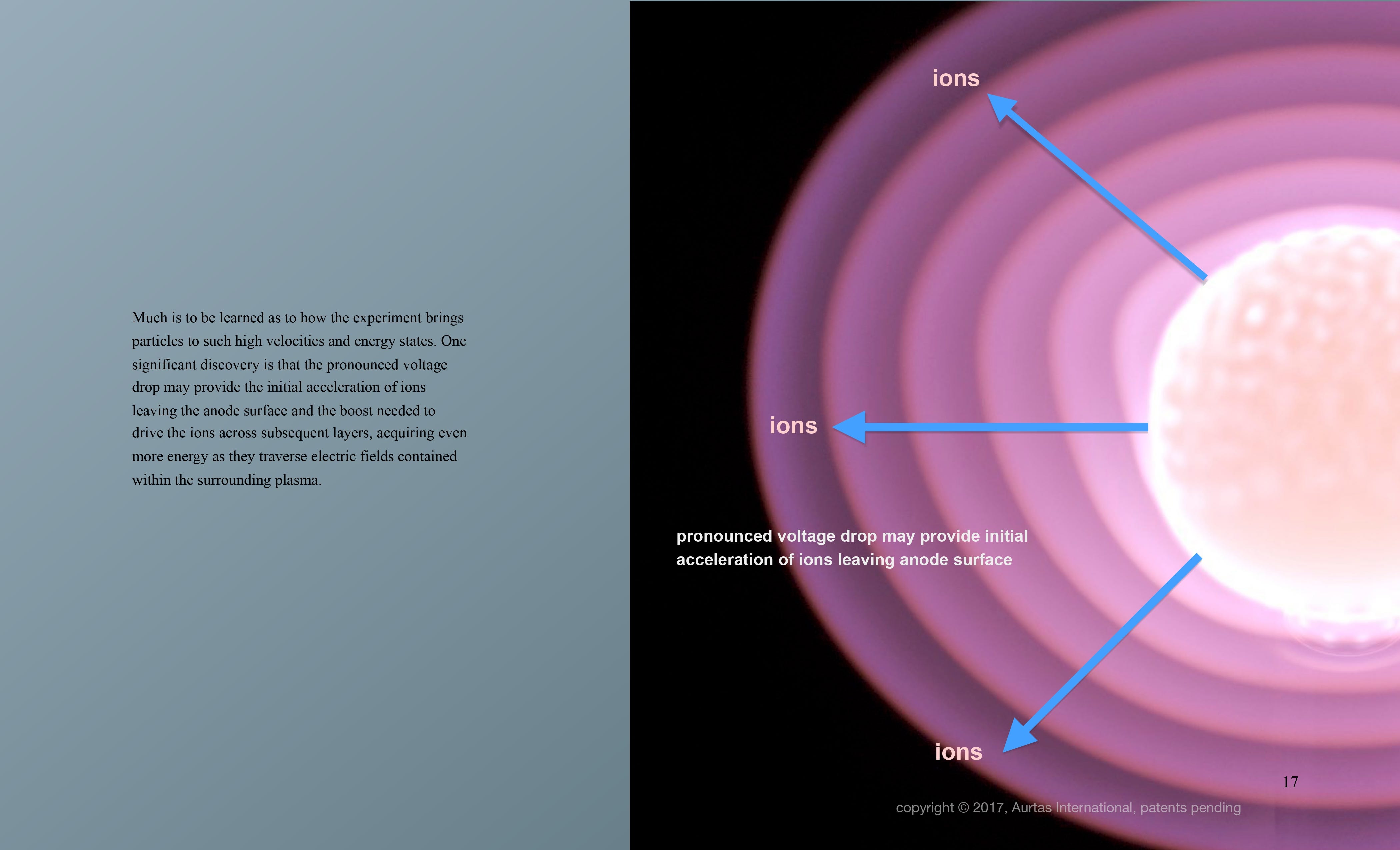
The Safire Project’s major discovery concerns the formation of stable spherical plasma double-layer shells through an electrochemical catalytic process between hydrogen and other trace elements. Nevertheless, these spherical plasma double-layer shells only form in a highly enervated enclosed vacuum chamber, in that the introduction of hydrogen into the Safire Chamber, in addition to the formation of plasma on the anode, creates significant pressure, and thereby, severely weakens and compromises the strength and integrity of the chamber’s initial vacuum state.
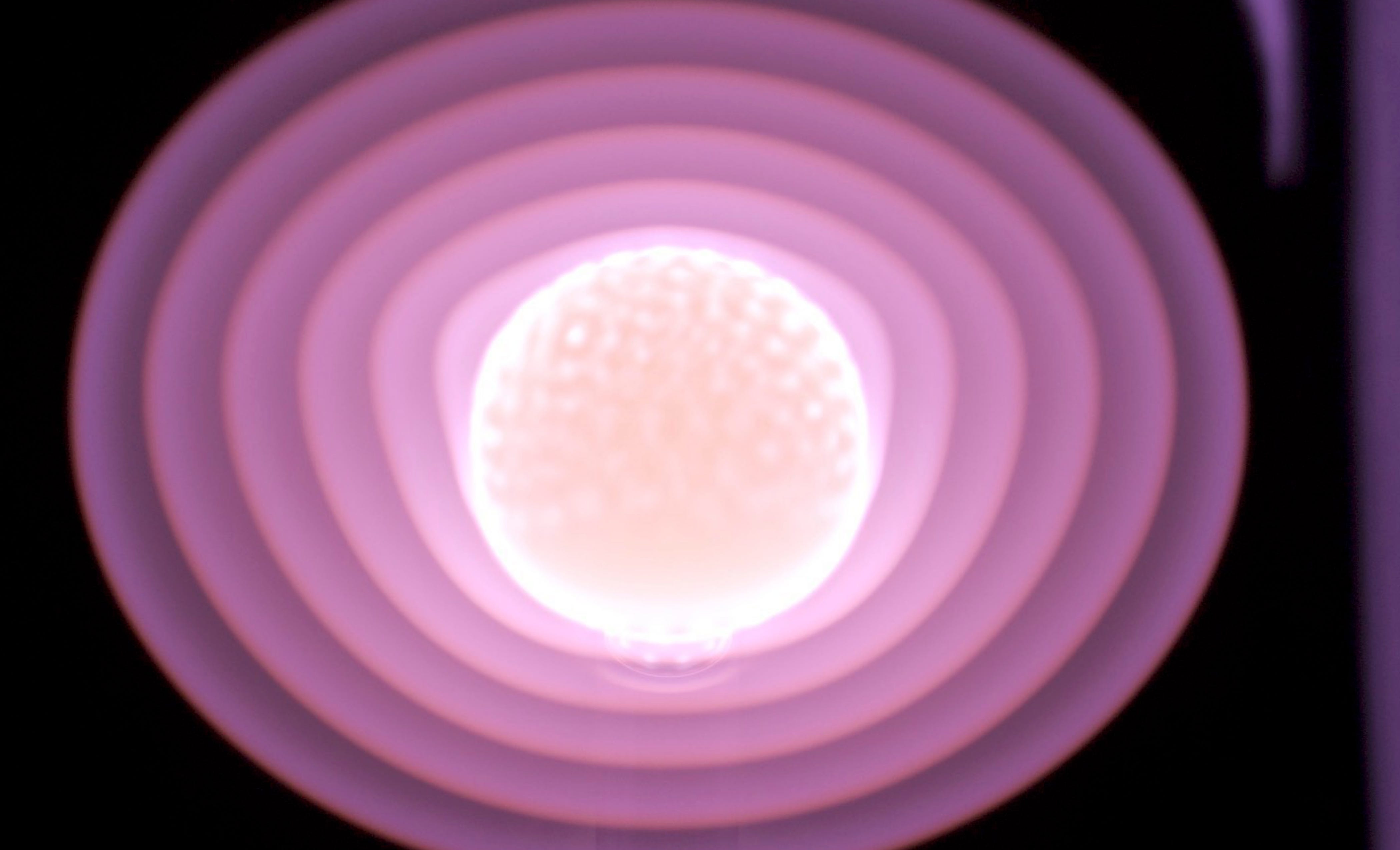
These shells are depicted as extremely powerful electromagnetic entities that can trap high-energy electrons, ions, and photons and cause the plasma to behave like a transforming capacitor.
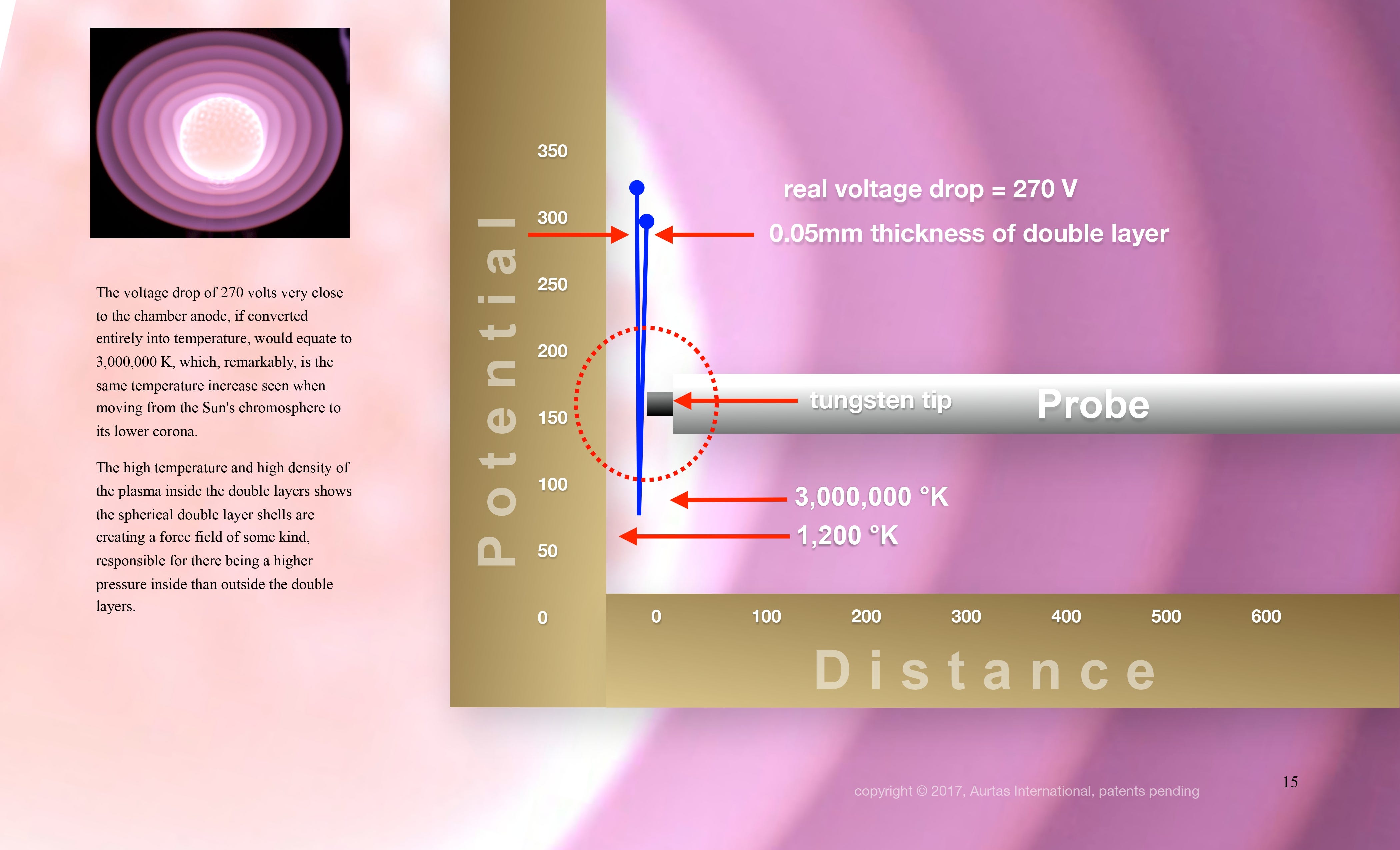
The Tungsten Probe:
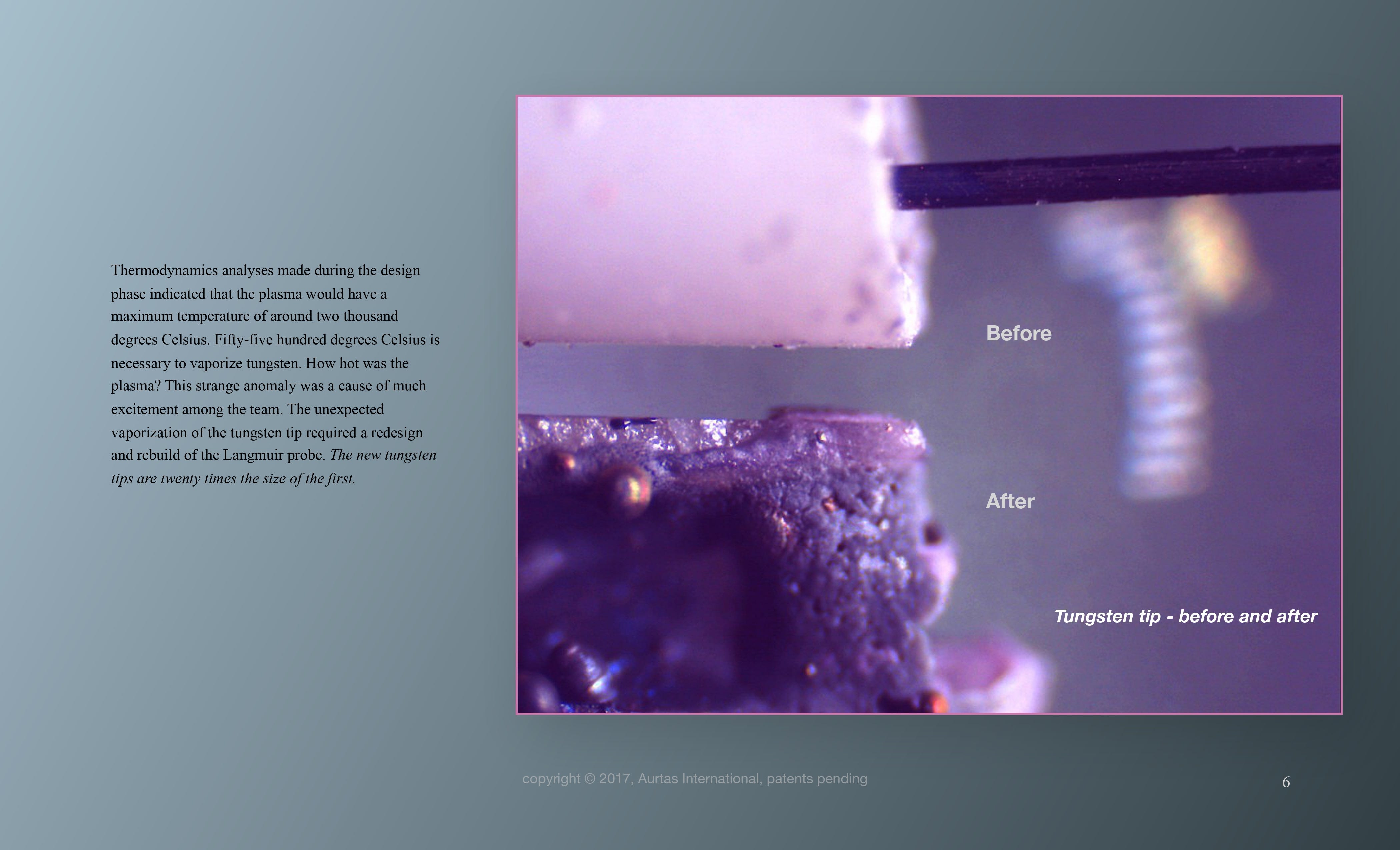
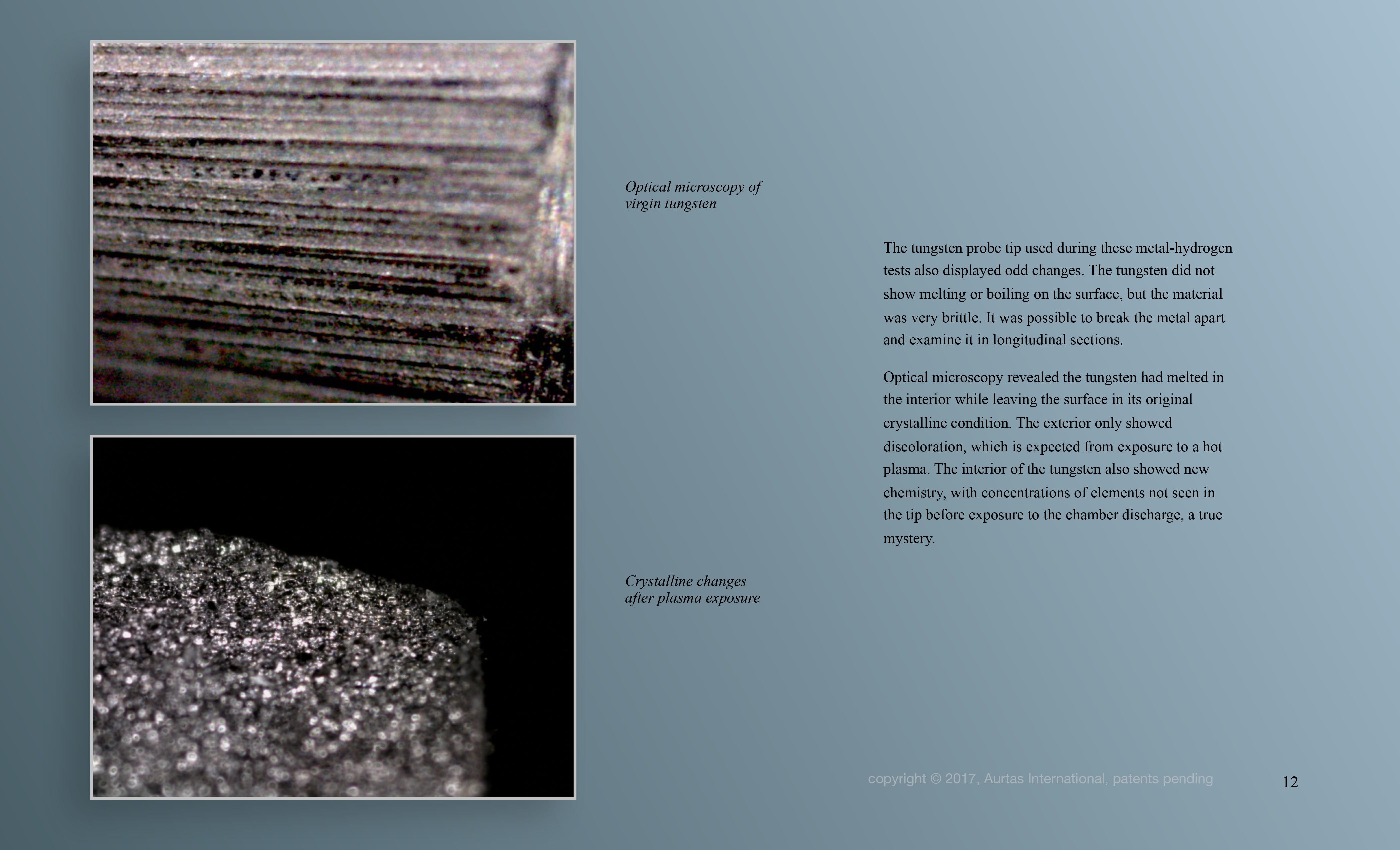
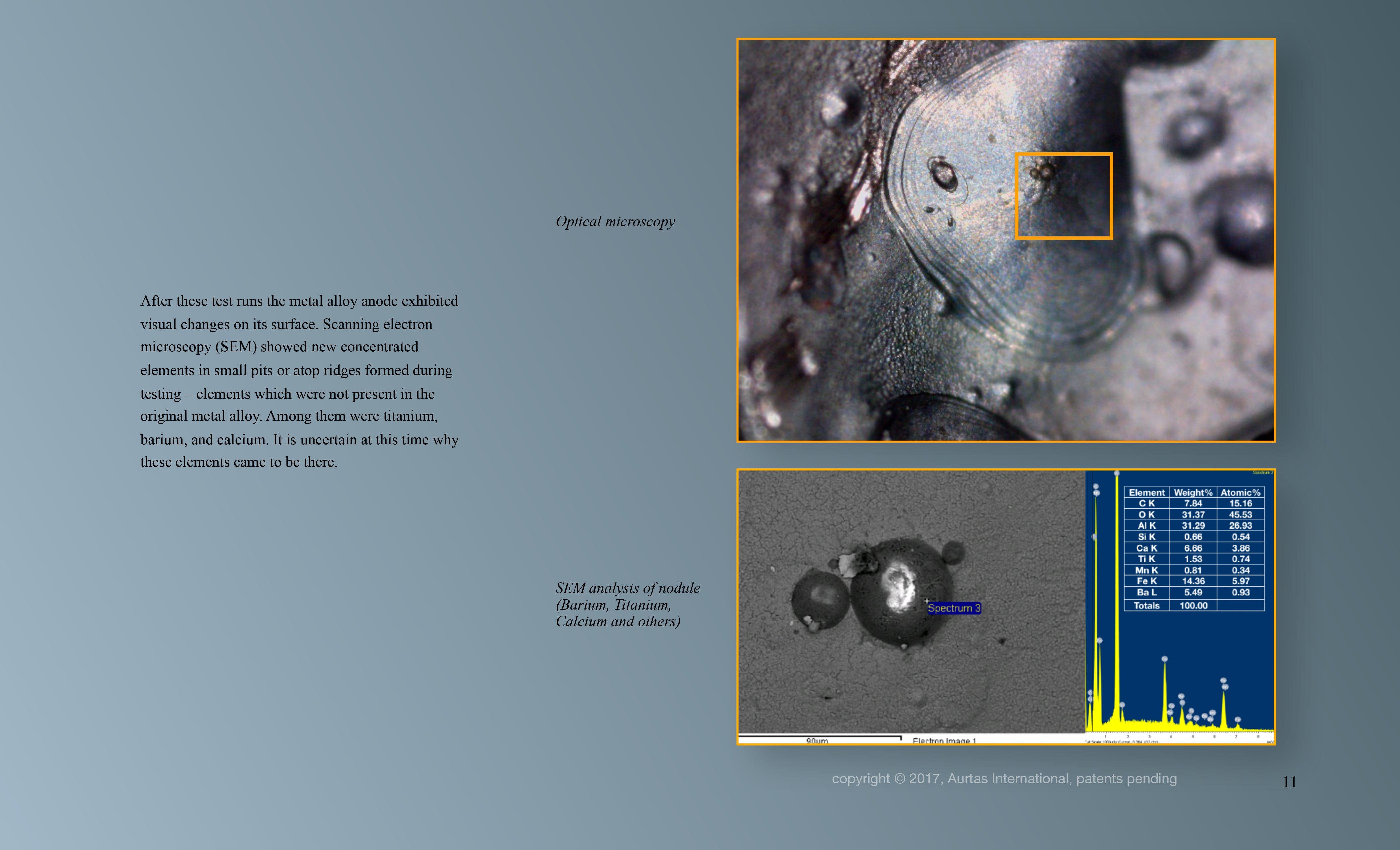
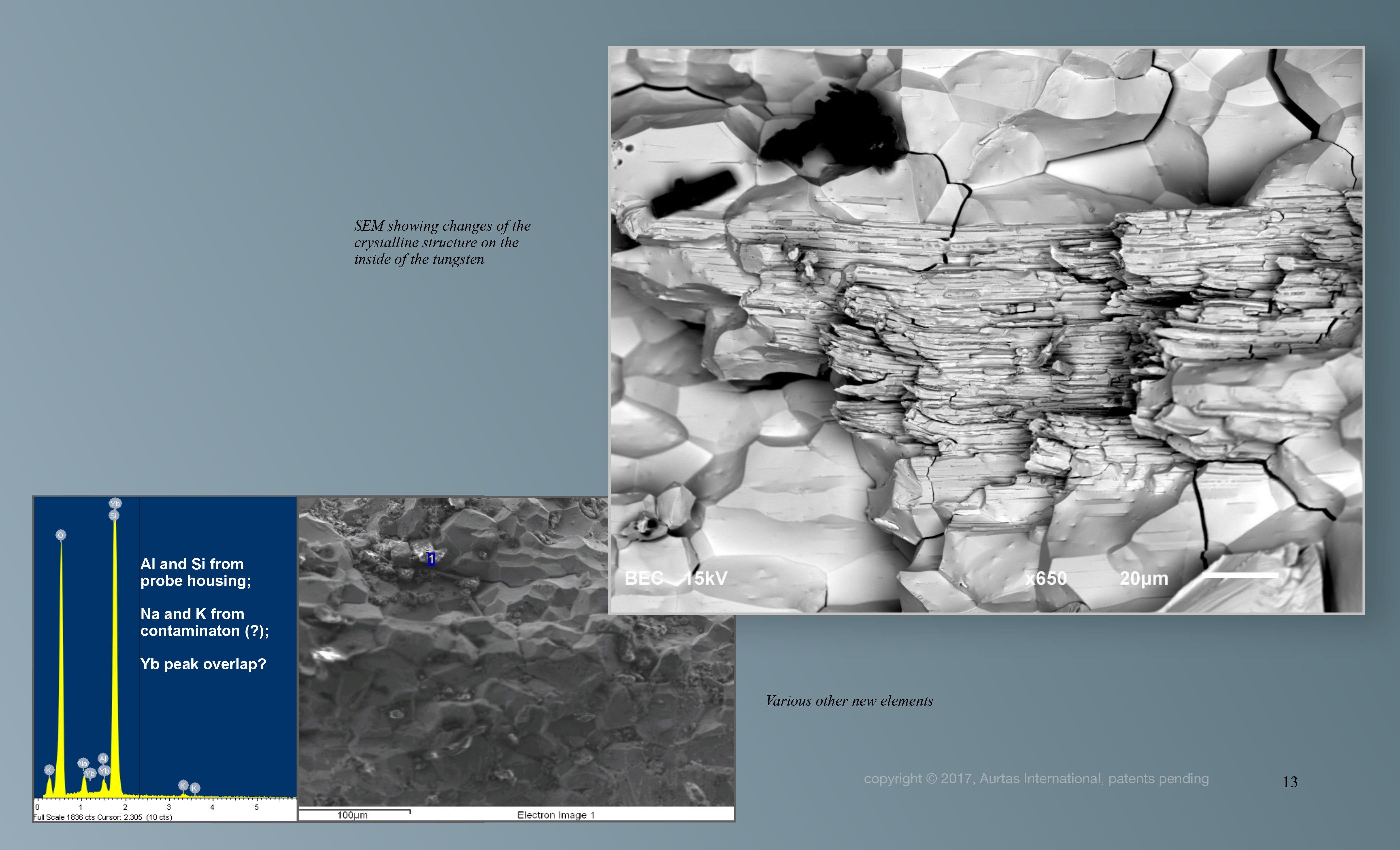
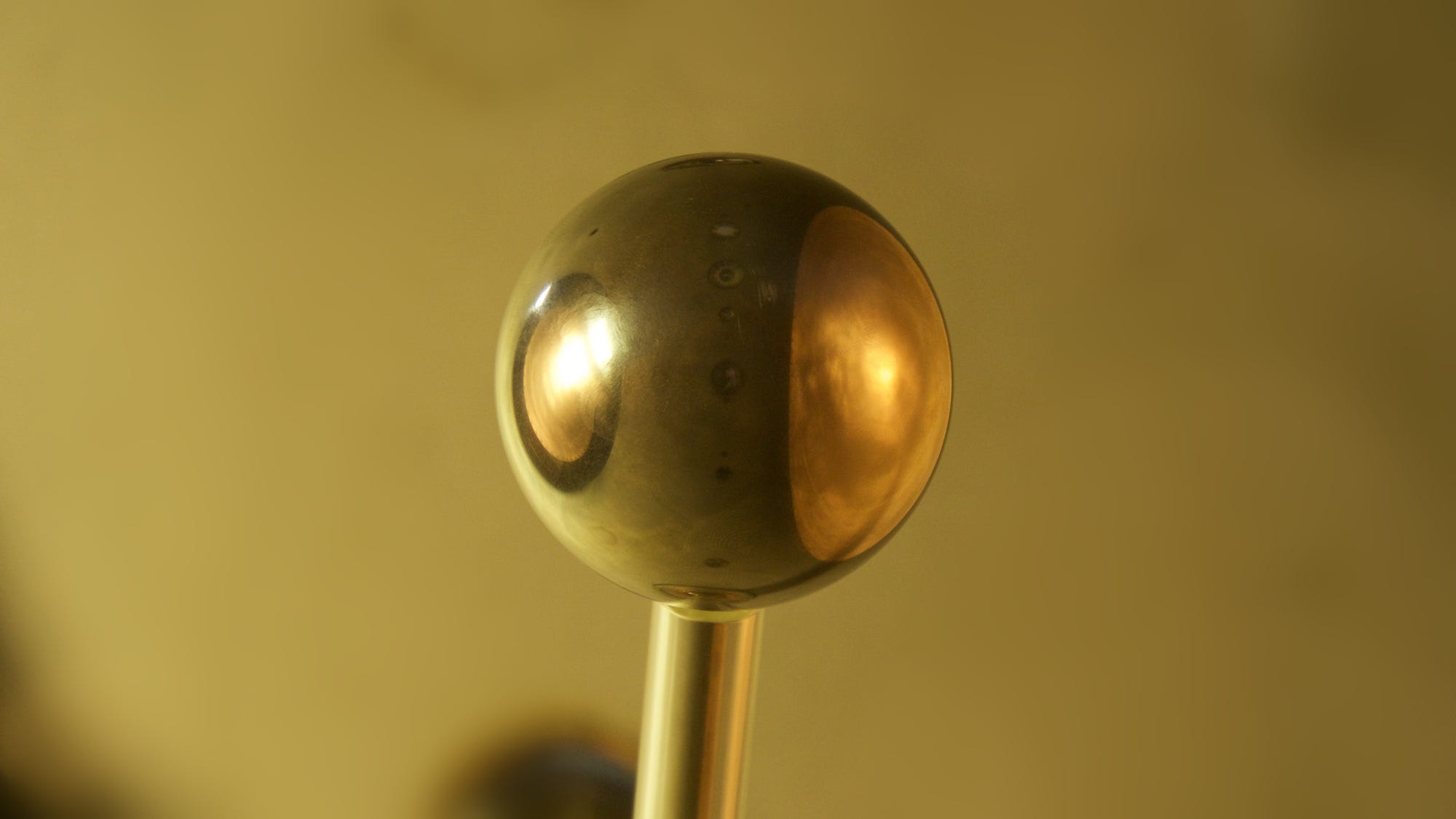
This is The 12 Centimeter Anode Prior to The Firing-Up of The Chamber:
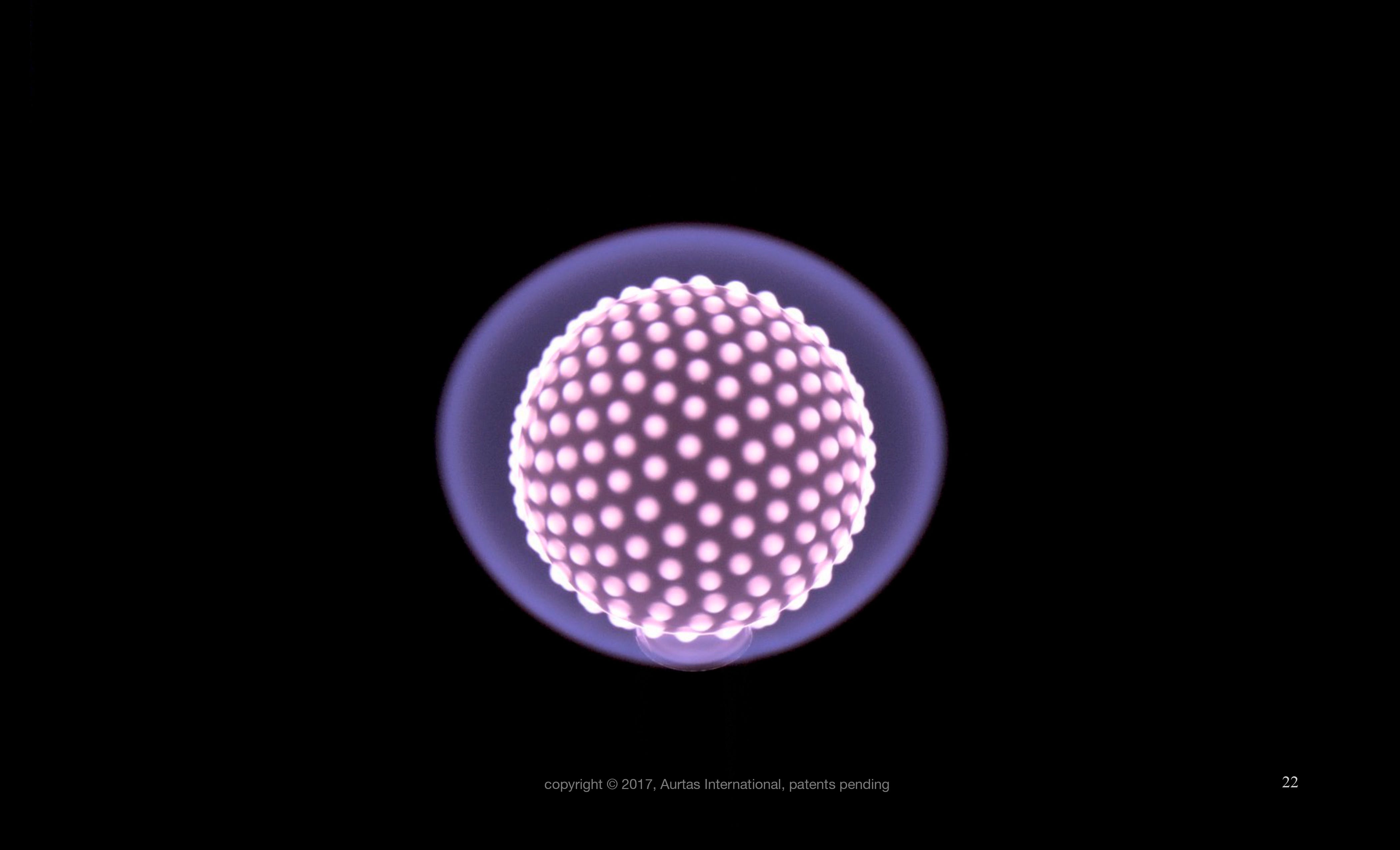
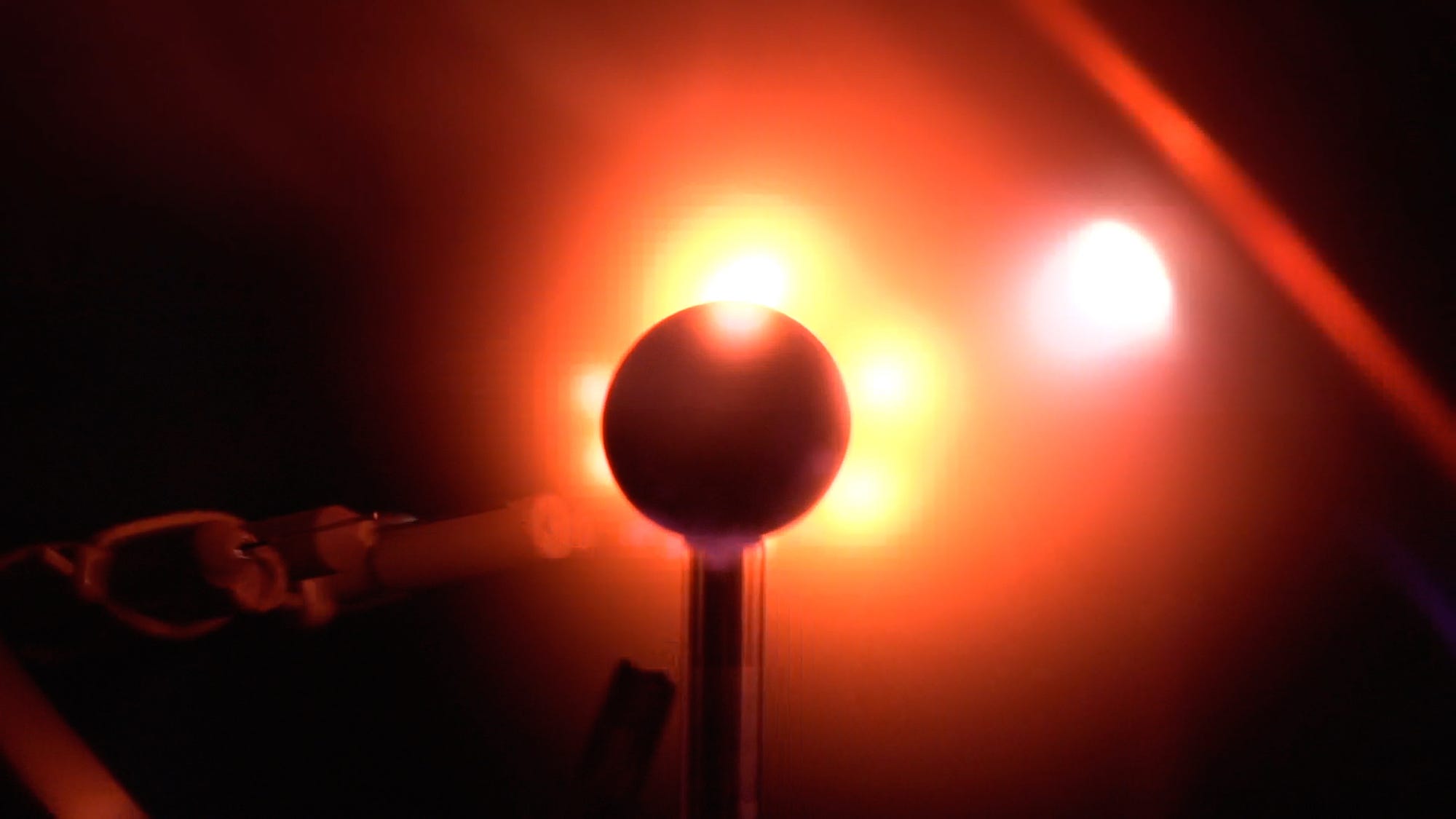
This is The 12 Centimeter Anode After Firing-Up The Chamber:
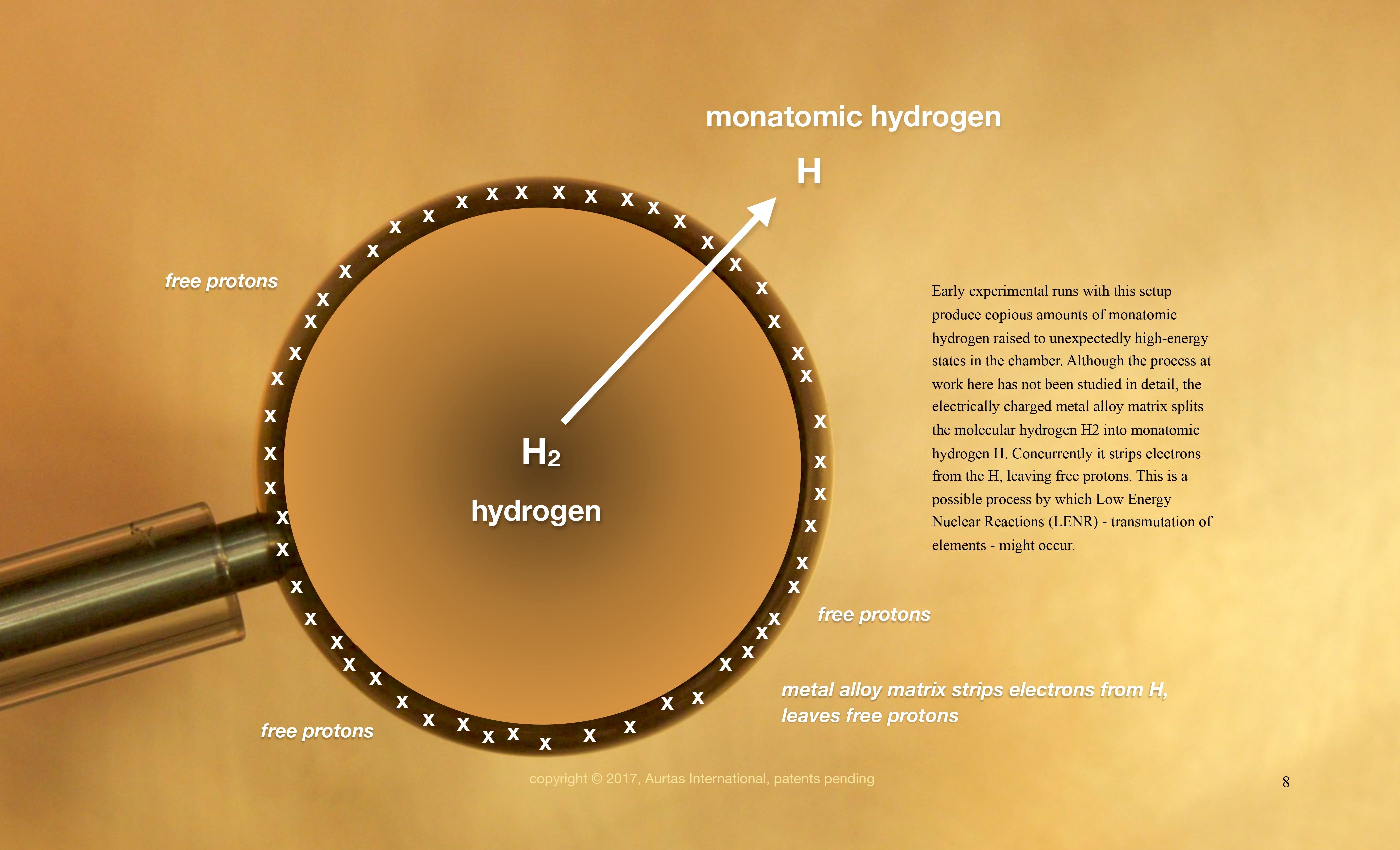
Let’s break down the individual components of the above statements and explore their relevance in the context of scientific understanding:
1. Electrochemical Catalytic Process
Electrochemical catalysis is a well-established field that involves the use of electrical energy to drive or enhance chemical reactions at an electrode surface. It is fundamental to various technologies like fuel cells and batteries, where electrical and chemical energy conversions take place. The use of hydrogen and trace elements in electrochemical reactions is also explored, particularly in the context of hydrogen evolution reactions and fuel cell development.
However, the specific combination of an electrochemical catalytic process between hydrogen and other trace elements causing the formation of plasma double layers is a more novel and potentially groundbreaking claim. While plasma catalysis is a distinct and emerging field, it typically involves the use of non-thermal plasmas to activate reactants and drive chemical transformations, according to ACS Publications.
2. Stable Spherical Plasma Double Layer Shells
Plasma double layers are localized, quasi-static parallel electric fields formed due to charge separation within a plasma. They have been observed in laboratory experiments and are invoked in astrophysical contexts, such as in the aurora and potentially in solar flares. These layers are characterized by a potential drop across a thin region and can accelerate charged particles and dissipate energy.
The discovery claims the formation of stable, spherical double layer shells, a specific type of structure that may have significant implications for plasma confinement and energy applications. The stability of such structures is crucial for various applications, especially in the pursuit of fusion energy.
3. Plasma Behaving as a Transforming Capacitor
The concept of a plasma behaving as a capacitor is recognized in the context of plasma physics. The double layer itself resembles the charge distribution in a capacitor. The idea of a "transforming capacitor" suggests a dynamic change in the capacitance of the plasma structure, possibly due to the interaction of the electromagnetic shells with the plasma or external fields.
4. Trapping of High Energy Particles
The trapping of high-energy electrons, ions, and photons by these electromagnetic shells is an intriguing aspect of the discovery. Efficiently trapping and containing high-energy particles is a critical challenge in various fields, including fusion energy research. Different types of traps are employed for this purpose, including electromagnetic traps and plasma traps.
5. Overall Assessment
The presented discovery encompasses several complex and potentially interconnected phenomena in plasma physics and electrochemistry. While individual components of the discovery are recognized areas of research, their specific interaction and implications described in the statement require further investigation and validation. The potential for such an electrochemical catalytic process to create stable, spherical plasma double layer shells that function as "transforming capacitors" and efficiently trap high-energy particles represents a significant leap forward in understanding and harnessing plasma phenomena.
6. Plasma Trapping Methods
Also, plasma trapping mechanisms must be employed in order to prevent ions from impacting and damaging the cathodes and the chamber walls, since the electrochemical catalytic process between hydrogen and other trace elements, alone, cannot sufficiently isolate the electromagnetic plasma effect to the anode without ions blasting off in all directions and hitting the inner walls of the chamber. Plasma trapping mechanisms also help to maintain the superheated plasma in a stable configuration. In short, the electrochemical catalytic process, itself, is insufficient in isolating the plasma configuration around the anode without this extra trapping mechanism.
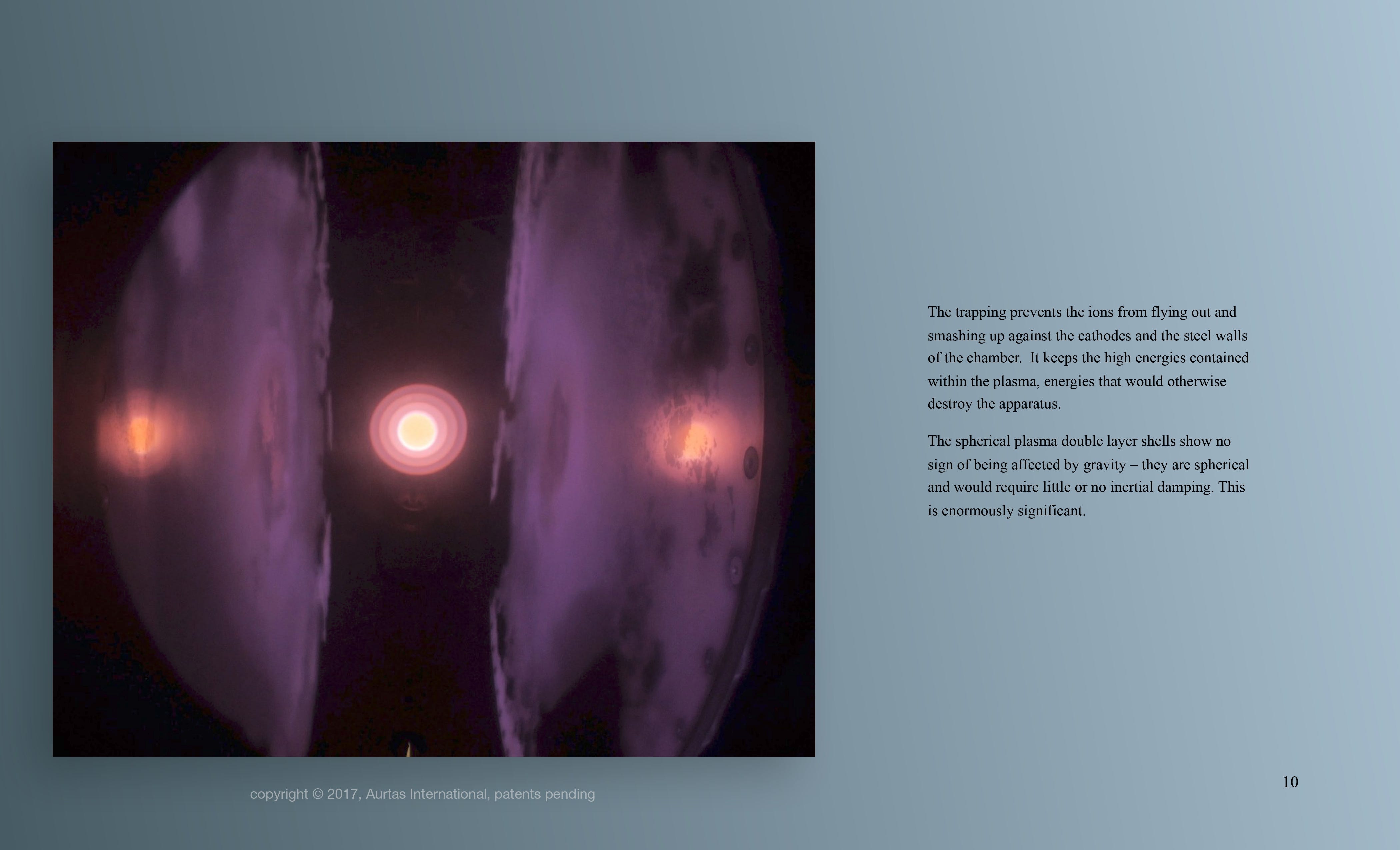
Electromagnetic Plasma Phenomenon Only Occurs Within an Enclosed System…NEVER Contiguous With an External Vacuum. The Earth is an Enclosed System, Enshrouded by The Firmament. That’s Why We See Plasma Phenomena in The Atmosphere. It’s Enclosed.
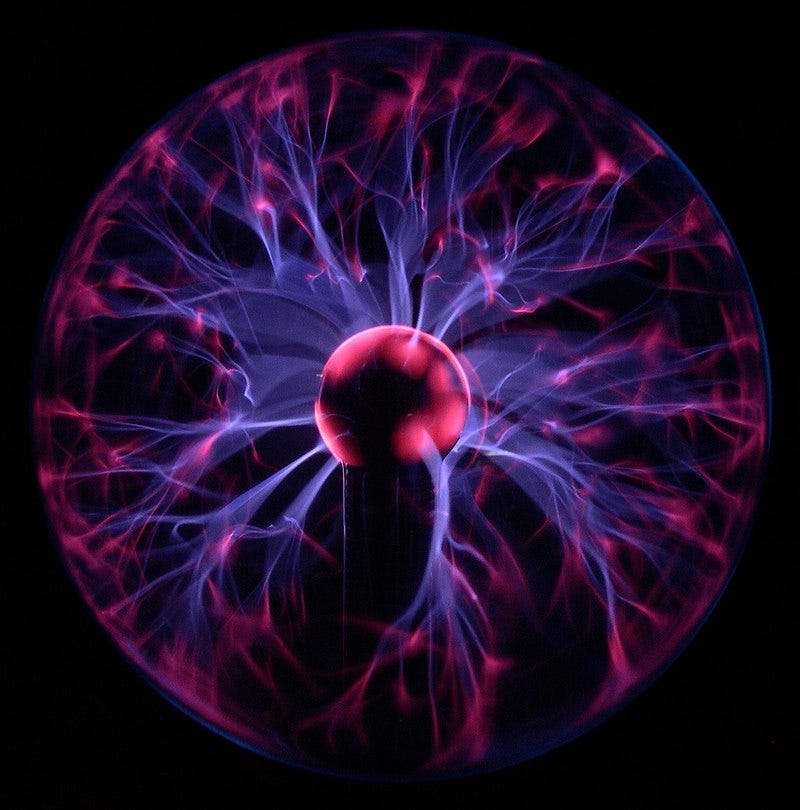
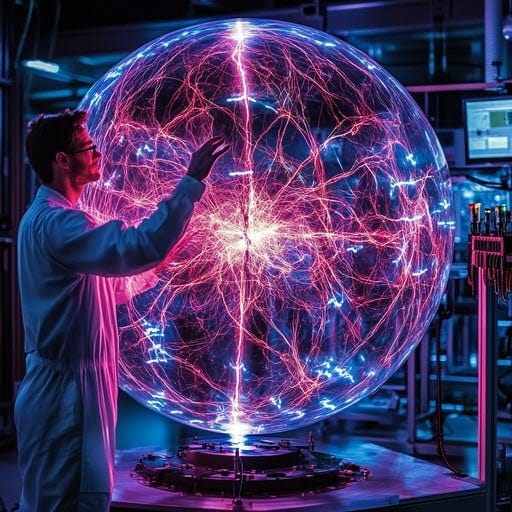
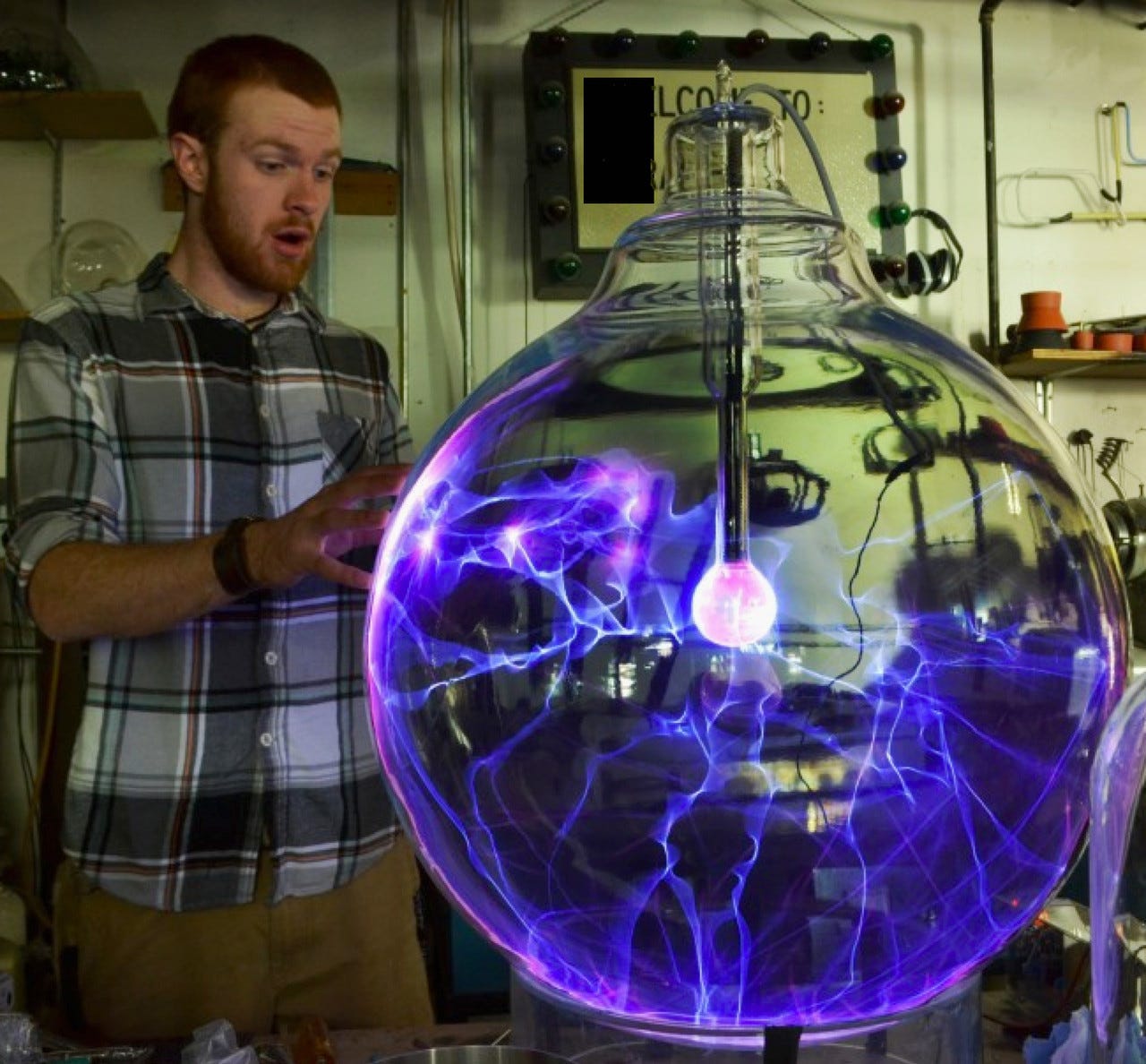
Electromagnetic Plasma Phenomenon Under The Enclosed Firmament. Again, Electromagnetic Plasma Phenomenon Only Occurs Within an Enclosed System…NEVER Contiguous With an External Vacuum. The Earth is an Enclosed System, Enshrouded by The Firmament. That’s Why We See Plasma Phenomena in The Atmosphere. It’s Enclosed.
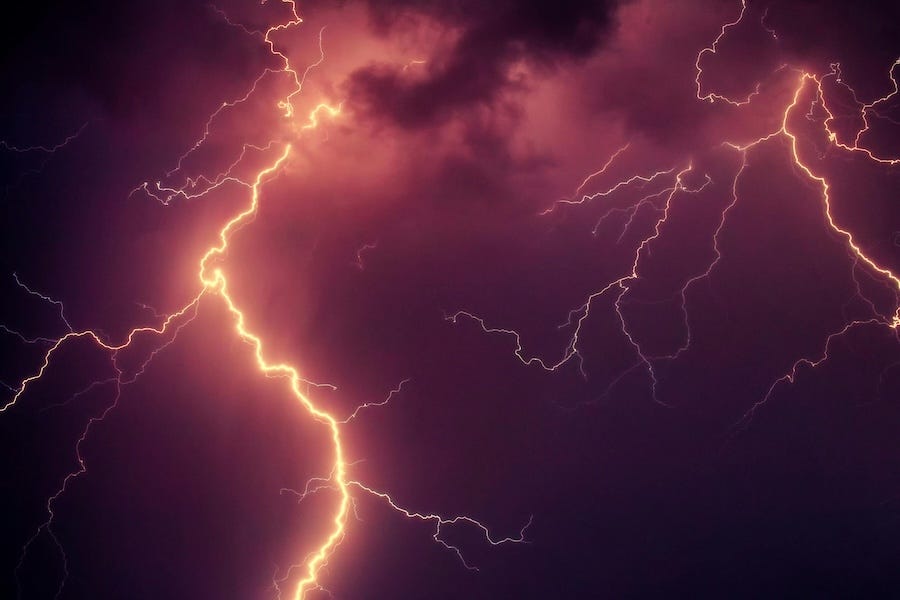
Electromagnetic Plasma Lightning Strikes in The Earth’s Enclosed Atmosphere. It All Makes Sense, Suddenly:
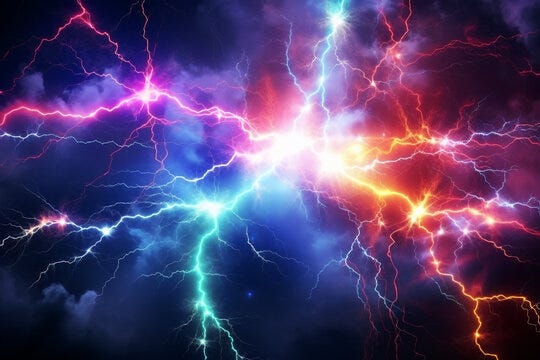

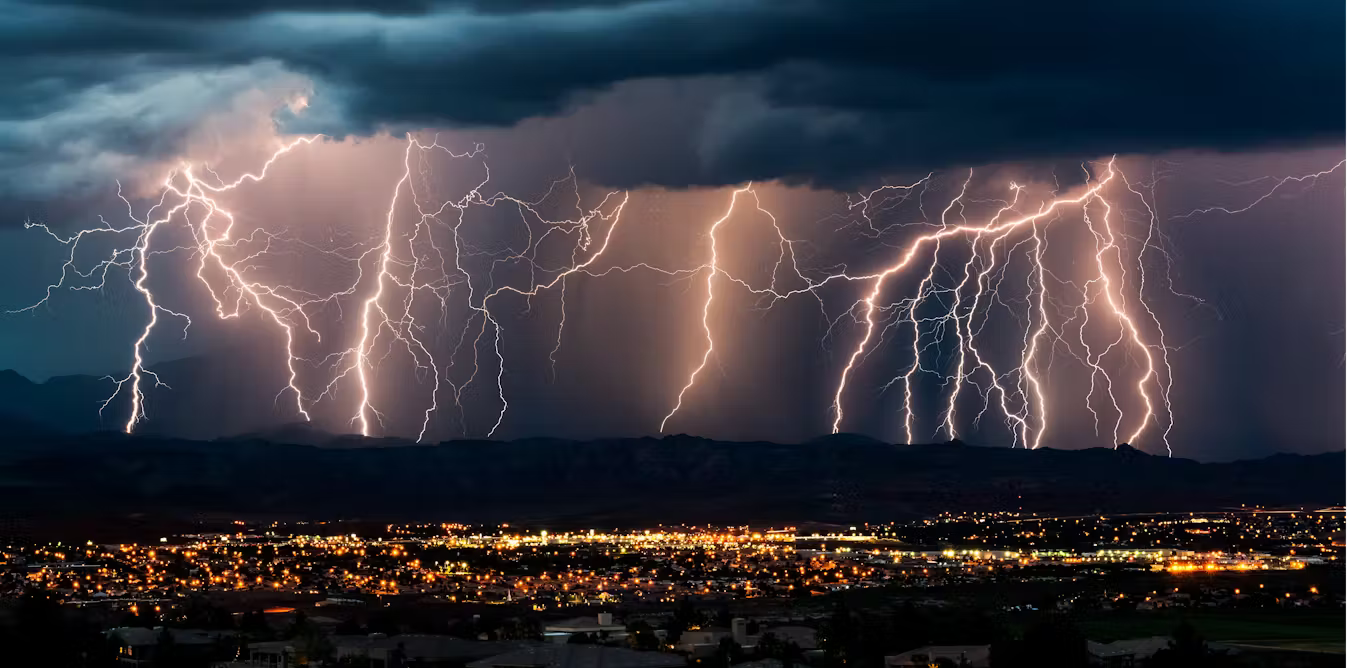

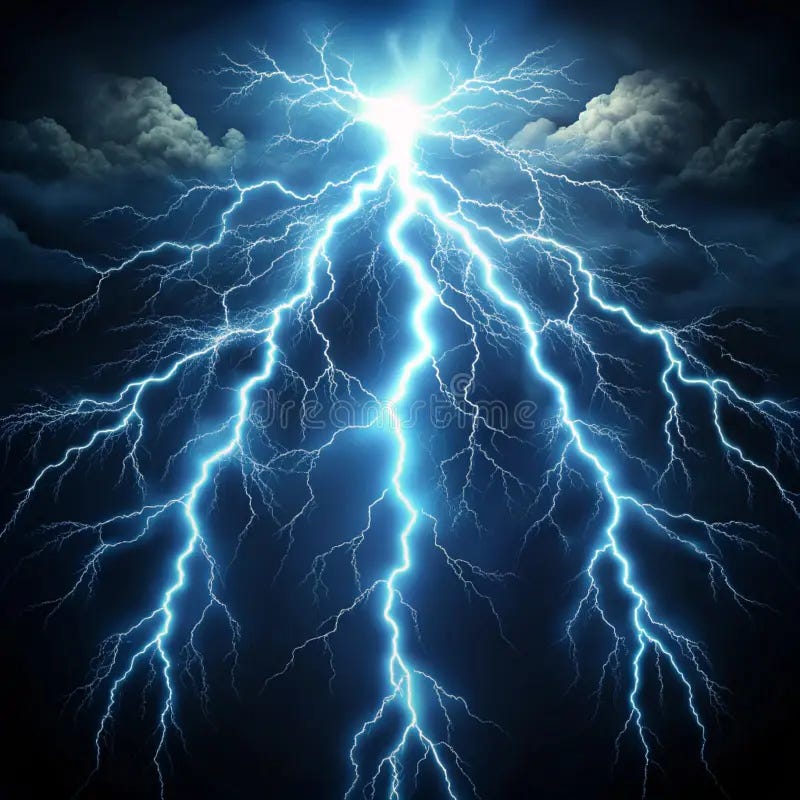
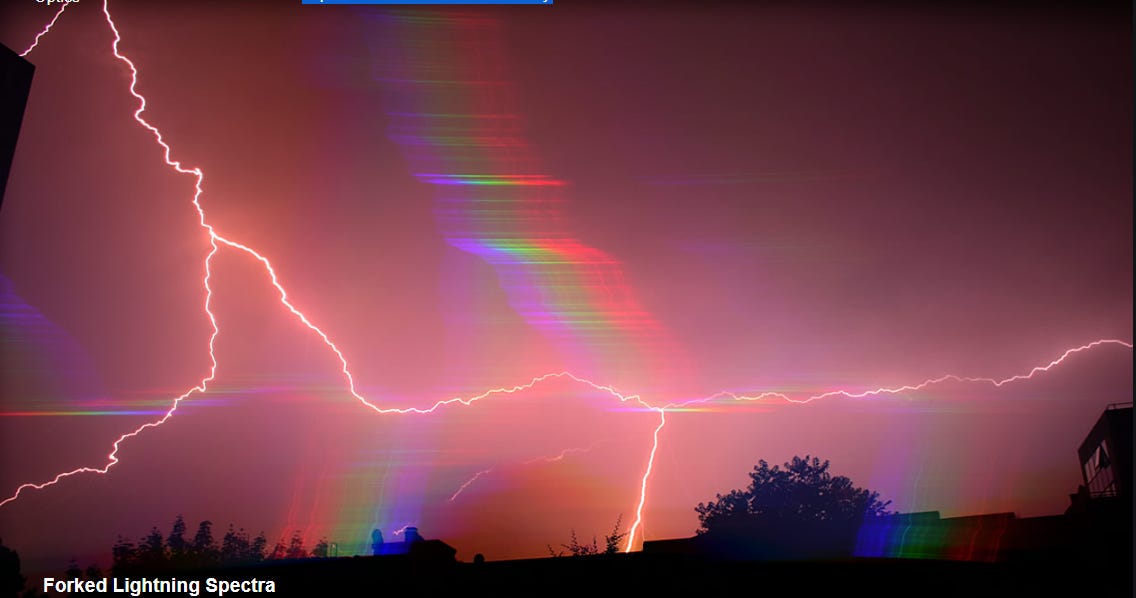
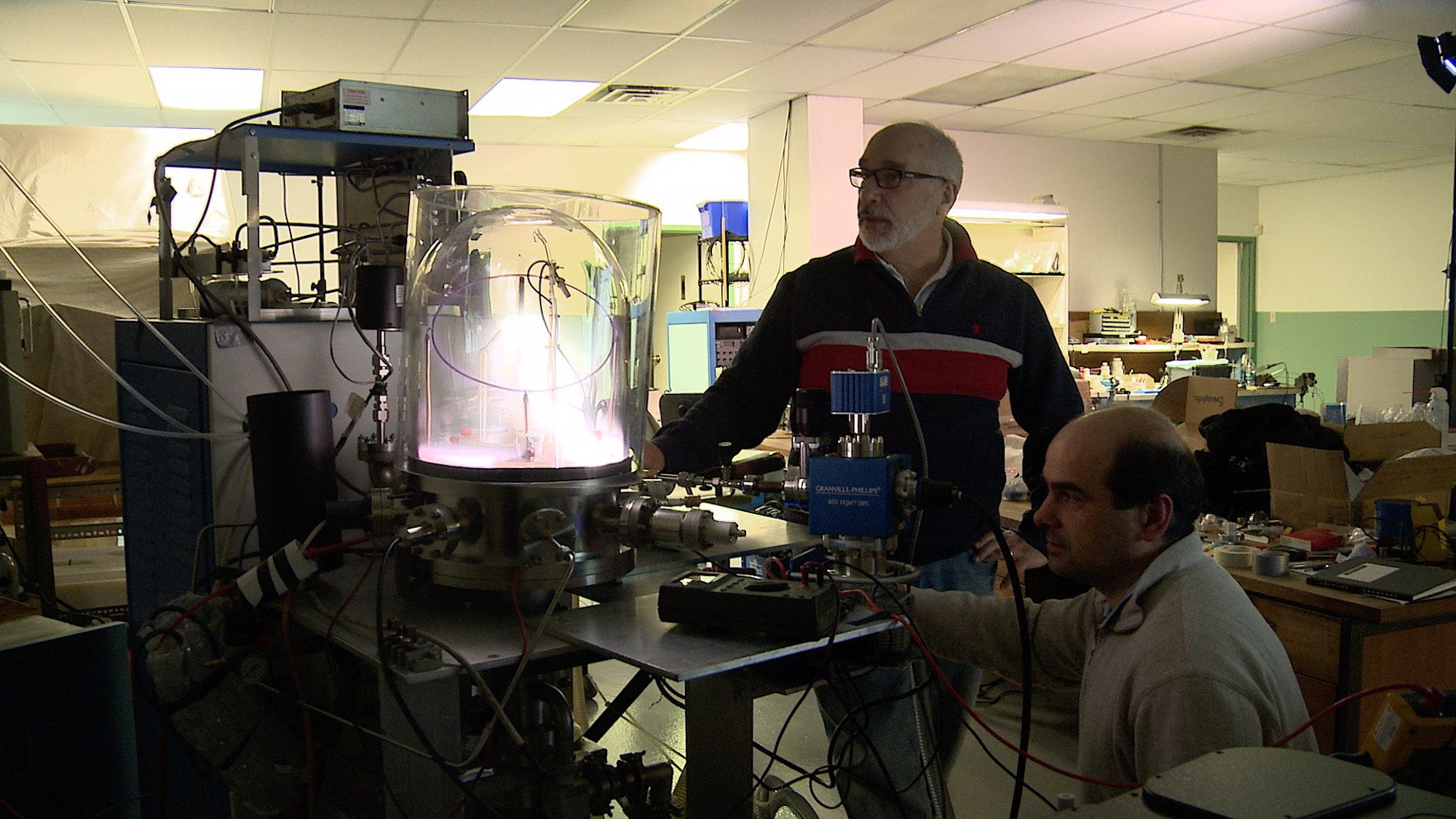
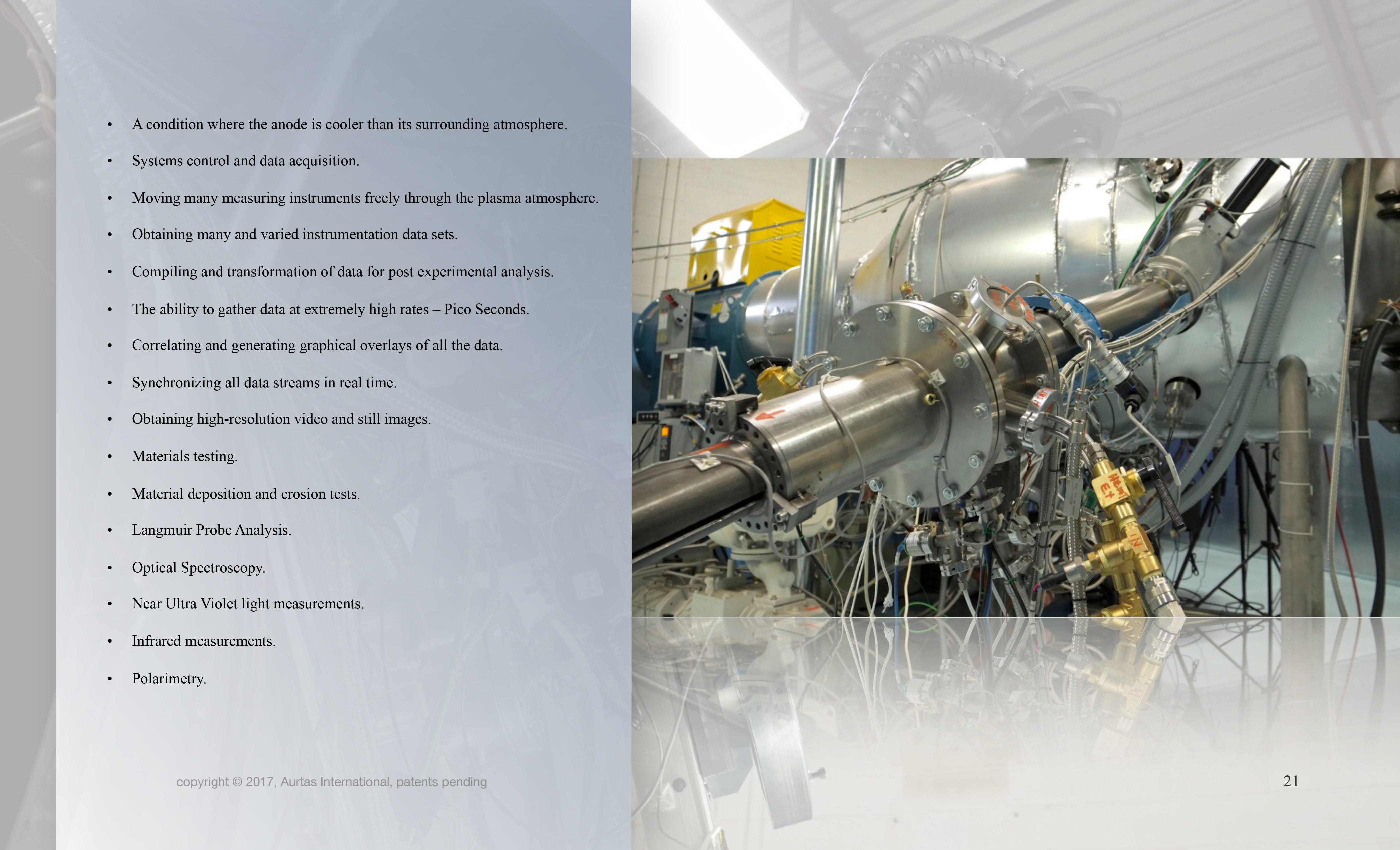
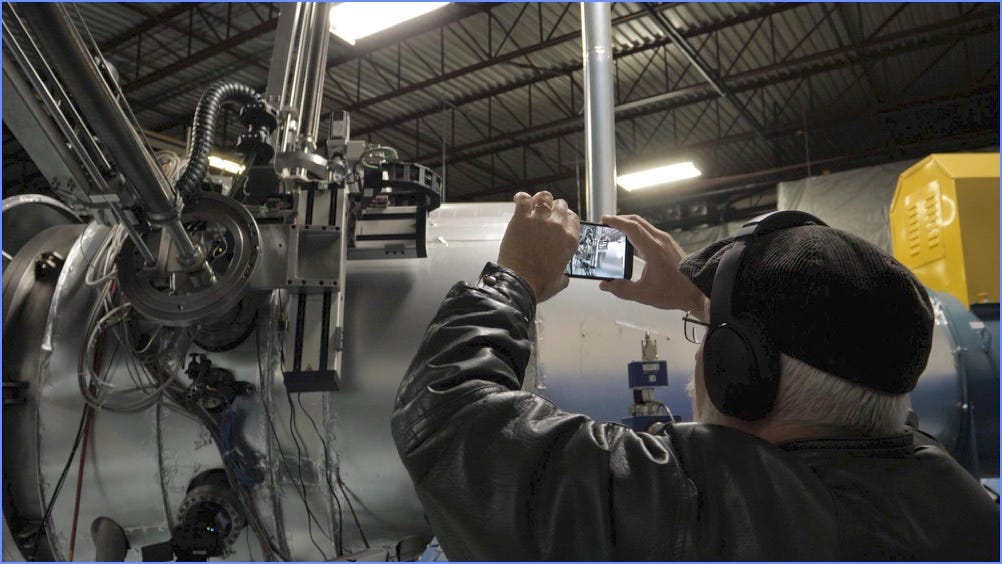
The “Safire Chamber” experiments require an enclosed system, and cannot work if a vacuum is contiguous to the laboratory application. The Phase I model of the experiment was an enclosed bell-jar vacuum chamber with a small metal spherical anode and a copper cathode, 1800W DC power, coupled with high-speed cameras, oscilloscopes, and optical/mass spectrometers. Using this setup, they were able to demonstrate a stable, self-organizing plasma within the enclosed chamber, again much like what we would expect if The Earth were an enclosed electromagnet plasma system, enclosed within The Firmament, which is a solid and impermeable barrier. The phenomena also included moving tufts that increased in number relative to the current, concentric rings of double-layers that showed independent rotation, and bursts of high-energy within the 2M to 10MW range.
The Starfire Chamber is Called a Chamber Because it is Enclosed, With a Solid and Impermeable Barrier, Like The Earth with The Firmament. ( Images From The Starfire Project Website):
Sonoluminescence – A Star in a Jar: Stars are Not Massive Nuclear Fusion Sun Infernos
Crazy as it may seem, every Star has an acoustical musical resonance, given at a value commensurate to a pressurized system, that holds matter into a pressurized density.
The Lord Spoke The World Into Existence:
The Sound by which all things are created isn’t just any sound. It’s The Word of God. In the Bible John wrote, “In the beginning was the Word, and The Word was with God, and The Word was God.” Through Sonoluminescence, The Lord animates all The Stars and heavenly bodies. The Stars are the result of the sound of God. The Lord spoke The World into existence, and with “The Word”, was vibration and frequency. All of existence, including matter and light, is animated and sustained by vibration and frequency, including The Luminaries above The Earth. The concept of God speaking the world into existence is a central theme in biblical creation stories, particularly in The Book of Genesis. It signifies that God’s Word has the power to create and bring things into being. This idea is often expressed through the phrase “Let there be Light”, and what is Sonoluminescence but light created by vibratory sound.
Experiment:
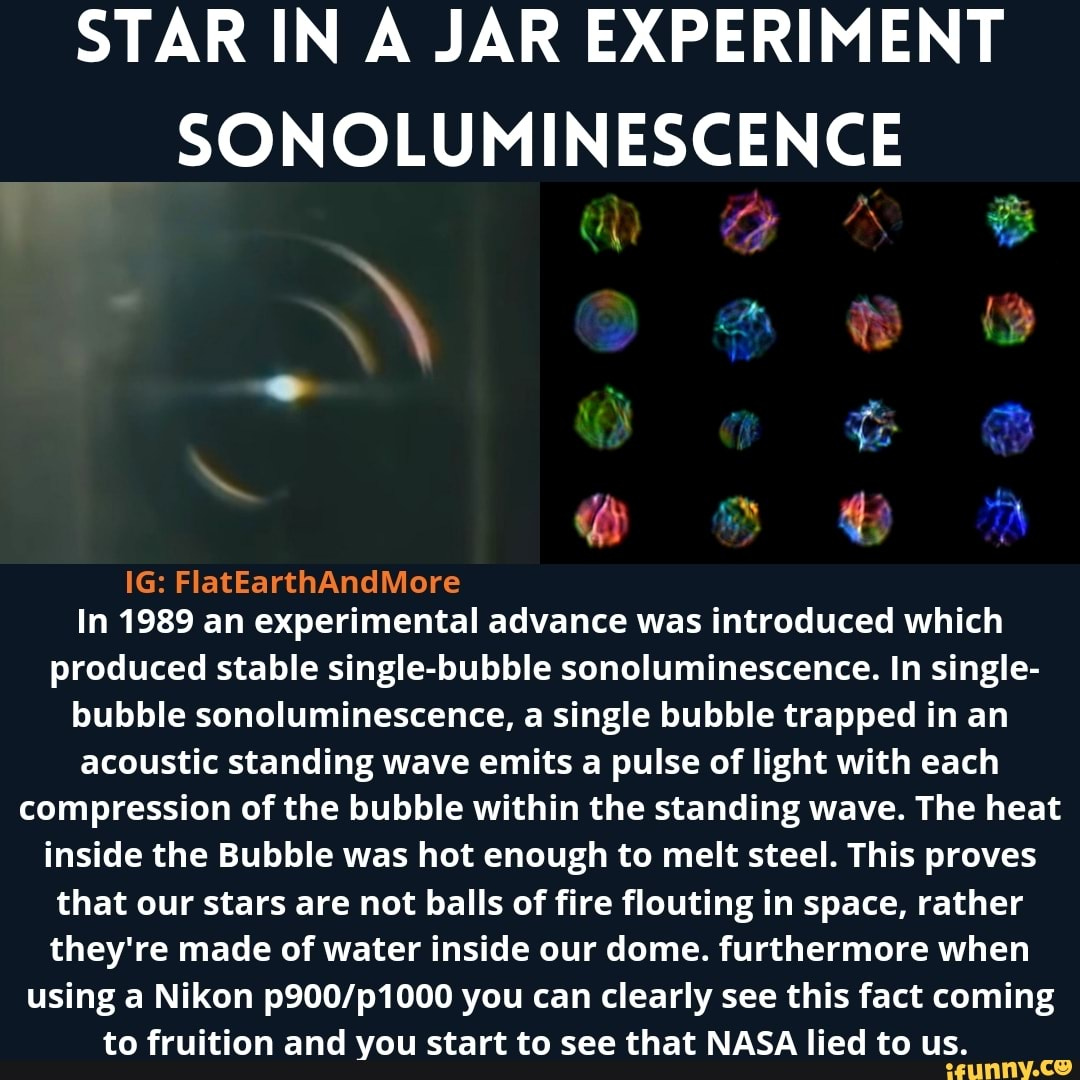
1. Professor Seth Putterman at UCLA creates The Sonoluminescent Effect
2. Temperature of Star = 22,000 Kelvin which is 21726.85 degrees.
Sonoluminescence - Star in a Jar:
The speculation that inside the star it burns at over 10,000,000 degrees, which is the estimated temperature of the core of The Sun in The Heliocentric Model, in a fusion process is something I cannot verify. Nevertheless, the exterior is over 21726.85 degrees and yet the star remains tiny in its picosecond expansion and contraction cycles, with tens of thousands of oscillations per second, according to MIT. Nobody understands it fully. As long as the sound is tuned on, the star remains twinkling, burning at the exterior at 21726.85 degrees, while the surrounding fluid in the container does not heat up. This baffles MIT scientists.
Sonoluminescence in Modern Cinema
The 1996 Movie, Chain Reaction, Exbibits Sonoluminescent Power Via a Hydrogen Gas Bubble in an Enclosed Jar of Water:
Chain Reaction is a 1996 American science fiction action thriller film directed by Andrew Davis and starring Keanu Reeves, Morgan Freeman, Rachel Weisz, Fred Ward, Kevin Dunn and Brian Cox. The plot centers on the invention of a new non-contaminating power source based on hydrogen and the attempts by the United States Government to prevent the spreading of this technology to other countries. The film was released in the United States on August 2, 1996.
While working with a team from the University of Chicago on a project to convert hydrogen from water into clean energy, student machinist Eddie Kasalivich inadvertently discovers a sound frequency in his home laboratory that perfectly stabilizes their process the next day.

An example of Sonoluminescence from the movie, Chain Reaction, where an ultrasound frequency activates a bubble of hydrogen to create energy:
Eddie solves the Machine ~ Chain Reaction (1996):
Hence, the Luminaries in the Firmament Above are Examples of Sonoluminescence.
Thunderbolts – Turning Sound Into Light
by Jimmy Mikecz

What if sound didn’t only flow through matter but could produce unexpected phenomena like light? Research in sound has revealed the capacity of sound to influence matter in a way that produces light. The phenomenon of Sonoluminescence (SL) is one example of this relationship.
“If you want to find the secrets of the universe, think in terms of energy, frequency, and vibration.”—Nikola Tesla
Sonoluminescence occurs when high-frequency sound vibrates tiny gas bubbles to reach star-like temperatures and emit flashes of light. The mechanism of sonoluminescence is not fully understood but its occurrence is well documented. As SL researchers probe deeper into the phenomenon, they have found that current fluid dynamic equations cannot explain why it happens. SL is a natural phenomenon as well, and marine biologists observe some species of shrimp using it as an attack against other creatures. It is the bridge between sound and light and can offer a deeper understanding of nature’s laws.
Sonoluminescence
In a study at UCLA called Sonoluminescence: How Bubbles Turn Sound into Light, scientists S.J. Putterman and K.R. Weninger explore the mathematics and phenomenology of sonoluminescence. It is known that this phenomenon is caused by the rapid expansion and contraction of a bubble. This is known because the broad-band UV light emitted appears at a frequency, though not continuously. Think of a strobe light as an analogy where flashes of light last only pico-seconds (trillionths of a second.) According to Prof. Putterman, the phenomenon of sonoluminescence can heat bubbles up to tens of thousands of degrees. The surface of these bubbles burns at about 20,000 K (~35,000 °F) and look like “little stars.”
“Sonoluminescence, the transduction of sound into light, is a phenomenon that pushes fluid mechanics beyond its limit.”
—Drs. S. J. Putterman and K. R. Weninger, UCLA Physics Department
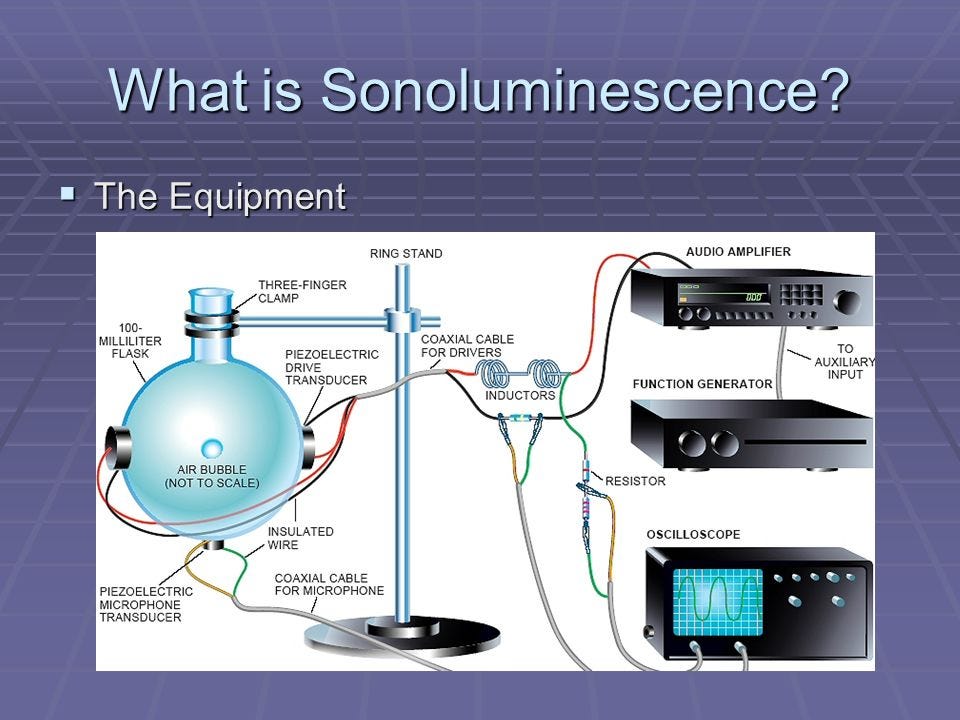
Sonoluminescence can be repeatedly produced in a controlled laboratory environment. Some of the key requirements are degassed water, a noble-gas mixture bubble, and a source of a high-frequency sound. Typically the sound is produced by a piezo-electric element. The scale of the experiment is typically small. Only about a cup-full of water is necessary, and the size of the bubble is typically only microns in size.
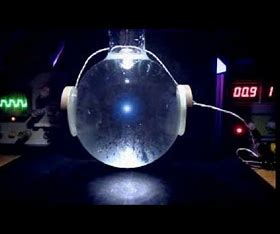
Sonoluminescence is in action below. It should be obvious why the phenomenon has gotten the nickname of “star in a jar.” The small cavitating bubble takes on the appearance of a small star.
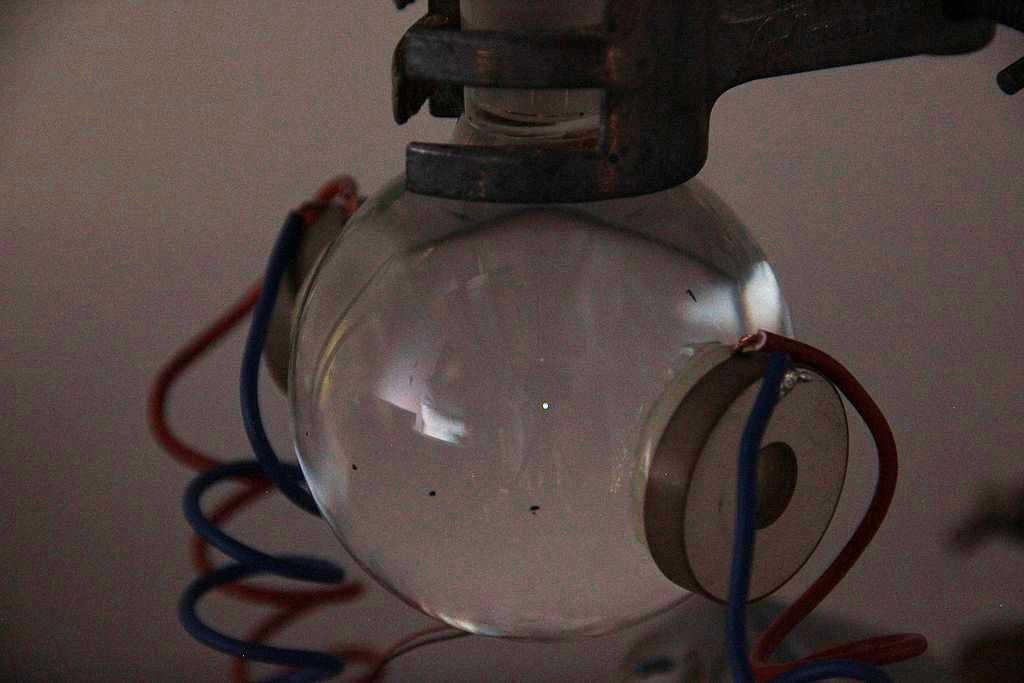
Sonoluminescence. In the center of the glass, a small blueish glowing bubble is visible. The frequency is about 25.7 kHz. The solution inside the glassware is partially degassed demi-water below room temperature. The glassware is handblown for an optimal spherical shape. This photo is taken in a darkened room with a camera exposure time of four seconds. Piezoelectric elements are glued to the glass with epoxy glue and the laboratory stand clamp has a cork lining inside.
Fluid Dynamics
Conventional fluid dynamic equations do not account for sonoluminescence entirely. Specifically, some researchers have applied Rayleigh’s equations to the bubble collapse but this “violates it’s domain of applicability” according to Putterman and Weninger. This violation occurs because Rayleigh’s equation is only for low Mach number motion, and the bubble collapse occurs at high Mach number. Putterman and Weninger also suggest that researchers misapply Saha’s equation and Bremsstrahlung equations to this phenomena. Without getting too deep into the details of these equations, Saha’s equation typically describes an ionization state of a gas relative to its temperature and pressure. Similarly, Bremsstrahlung equations typically describe electromagnetic radiation produced by the deceleration of a charged particle. At present, these equations do not adequately explain sonoluminescence for a variety of reasons.
Plasma Core?
Plasma is the fourth state of matter, commonly generated during lightning strikes. Research shows the inner core of sonoluminescent bubbles could be plasma.
Some researchers believe that during sonoluminescence, bubbles have an inner core of plasma. In a study published in peer-reviewed Journal Nature, entitled “Plasma formation and temperature measurement during single-bubble cavitation,” researchers state that “emitting species must originate from collisions with high-energy electrons, ions, or particles from a hot plasma core.” Other research supports the hypothesis that SL bubbles have a hot plasma core.
According to another recent publication called “Evidence for a Plasma Core during Multibubble Sonoluminescence in Sulfuric Acid”: “. . . the observation of molecular and atomic ions is the first experimental demonstration of an inner ionized plasma core during single-bubble cavitation.” Thus, current research suggests that the core of the SL bubbles may be plasma, the fourth fundamental state of matter. Perhaps this is the reason why fluid dynamic equations do not match the phenomenon.
Other Known Qualities of Sonoluminescent Bubbles
Researchers discovered that during sonoluminescence, a bubble rapidly expands then contracts in cavitation. Looking deeper into this, researchers have found that the bubble does operate within some conventional chemical laws. One of these is the fact that, as the bubble collapses, it rebounds because of Van Der Waals forces.
The accompanying graph depicts the collapse of a cavitating bubble over time. Notice that the bubble has a peak radius of about 5.3 micrometers. The bubble then rapidly collapses in about 20 nanoseconds. As the bubble “bottoms out” (approaches the van der Waals radius, rw ), it springs back and oscillates through several cycles of expansion and contraction.
Noble Gases
Sonoluminescence appears to emit the most light with noble gases or noble gas mixtures. This is probably because of the inherent non-reactivity of the noble gas chemical group. Researchers use helium, neon, argon, and xenon to create SL. Star-in-a-jar researchers use oxygen and nitrogen mixed with a noble gas to create sonoluminescence in a laboratory. According to Putterman and Weninger, SL with only oxygen and nitrogen is difficult. A nitrogen and oxygen mixture produces a “dim light.” The article also states that noble gases concentrate in the bubble as cavitation occurs. This happens because the force of the bubble collapse causes reactive elements (H2O, N2, O2) to dissociate. Then, the surrounding water draws these gases into it.
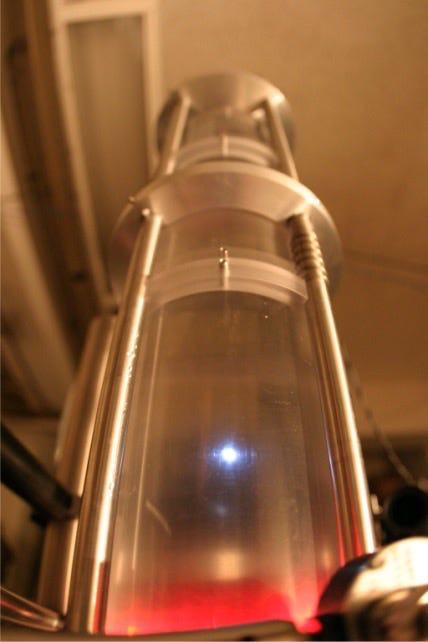
Image of Sonoluminescence. Source: Putterman, Weninger
Shrimpoluminescence
An incredible example of sonoluminescence is the “stun” action of both the pistol and mantis shrimp. These predatory shrimp knock-out their prey by “loading” their claws with tension and releasing it suddenly. The shrimp clamps its claws shut at such an extreme velocity that the surrounding water vaporizes. As in the laboratory form of SL, this extreme cavitation produces the same light and extreme surface temperatures [3]. However, this light is not visible to the naked eye as in the laboratory experiment. The video below depicts this amazing process. Researchers Detlef Lohse, Barbara Schmitz, and Michel Versluis have named this “shrimpoluminescence.” An article published in Nature regarding the topic called “Snapping Shrimp Make Flashing Bubbles” states plainly that SL occurs at the snap.
A Bridge Between Sound and Light
It is not obvious why a bubble created by high-frequency sound contained in nothing more than a glass of water could reach temperatures close to the surface of the sun. Not surprisingly, researchers first looked at fluid dynamics to reach an explanation for sonoluminescence but found it lacking. Could plasma physics be the road by which an explanation will arrive? Would the Electric Universe model explain what is happening? As more research unfolds, a deeper understanding of the nature of this bridge between sound and light could lead both to greater scientific understanding and practical applications.
Real Stars Are Not Planets
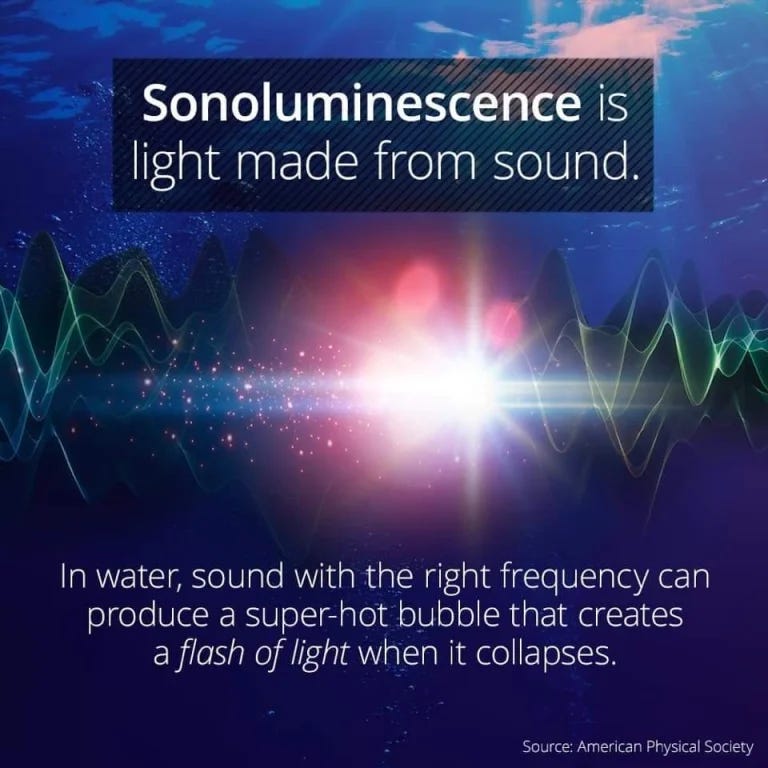
Frequency of The Heavens: Cymatics, Bio and Sonoluminescence, Actual Stars, and “Planets”:
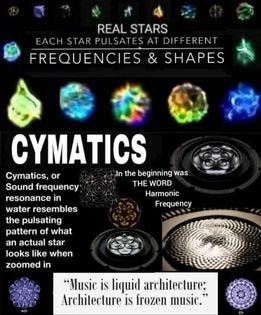
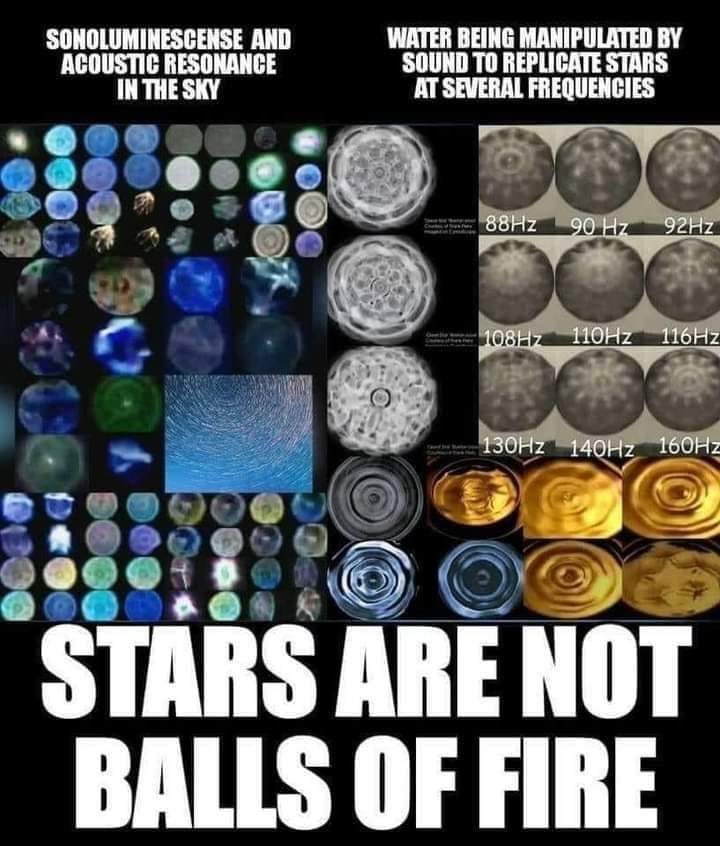
Wandering Star Venus, the Sun and Sea Observation - Nikon P900:
The Lights in the Firmament Above: Sonoluminescence:
Stars and the “Planets”, aka Wandering Stars, are not what we’ve been told they are. They are Sonoluminescent phenomena. All of Creation is immersed Electromagnetic Energy Fields, and not Atomistic Particles. These Divine Energies are more connected to us then we’ve been lead to believe, but since the Heliocentric Cosmology Lie was forced upon us, we’ve since been disconnected to them. We live in a divine world where we have been led to beLIEve we are nothing but specks of dust on a spinning ball in an vast Outer Space vacuum. Nothing could be farther from The Truth.
The Lights in the FIRMAMENT Above:
Sonoluminescence - Star in a Jar:
STARS Through a Telescope: Arcturus, Procyon, Astronomy: HOW STARS REALLY LOOK:
Venus Nonsense You Tube Video: Sonoluminescence - Star in a Jar:
Punching Water So Hard LIGHT Comes Out – Sonoluminescence:
VIDEO PROOF The Moon, Stars + Planet X Are MUCH CLOSER Than You Were Told!! | Fe PROOF 15 pt1:
PROOF Stars ARE NOT What You Were Told!! + They ARE NOT Trillions Of Miles Away!! | FE PROOF 15 pt2:
Stars ARE NOT Distant Suns!! They ACTUALLY!! | THINK QUICK ep23
Scientist CREATE Star In Water Using Sound Waves!! PROOF of Waters Above? | FE ADVANCED ep24:
Outanding work!
Inductance and impedance.....
Compressed water?
The bubble turns to light on it's collapse.
Harmonic Aetheric substrate disruption.
The time difference between creation and collapse.
What is the geometry of the "Star in a bottle"?
In a world run by maniacs, further explanations are pending...😎
Cheers,
Michael.